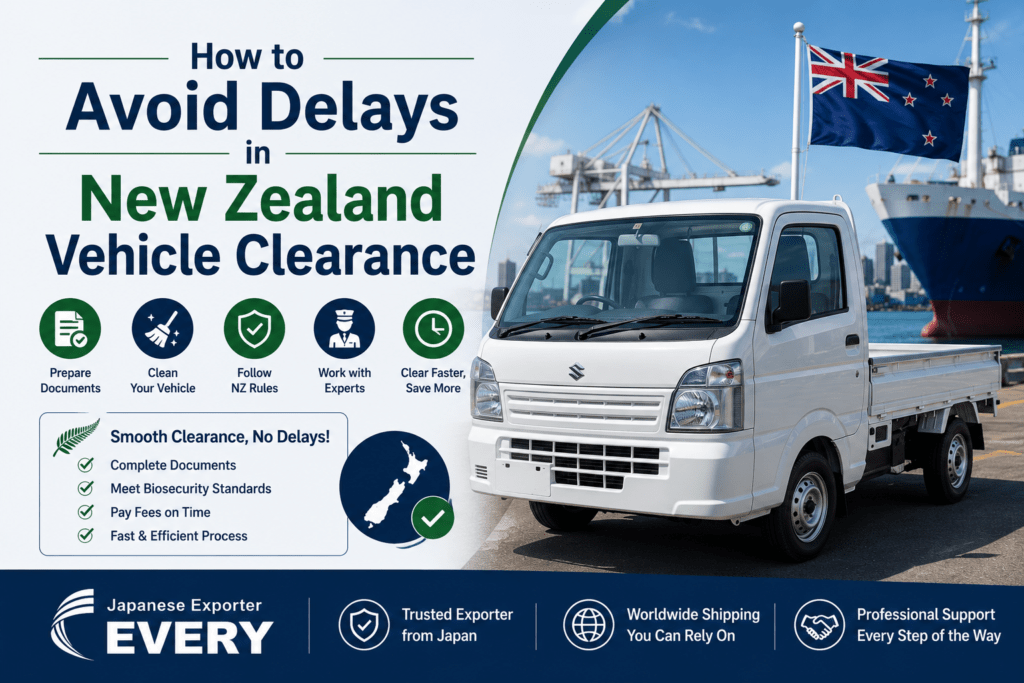

How to Avoid Delays in New Zealand Vehicle Clearance: A Complete Guide for Fast and Hassle-Free Imports
Importing a used vehicle from Japan to New Zealand is an excellent way to own a reliable, affordable, and high-quality car, truck, van, bus, or commercial vehicle. Japanese vehicles are famous for their low mileage, excellent condition, and long-lasting performance. As a result, many New Zealand buyers choose Japanese imports every year.
However, even the best vehicle can face delays if the import process is not handled correctly. Missing documents, biosecurity issues, or incorrect paperwork can increase storage costs and slow delivery.
Fortunately, most delays are easy to avoid. With good preparation and the right export partner, your vehicle can move through customs and compliance quickly.
This guide explains the most common causes of clearance delays and shares practical tips to help you receive your imported vehicle without unnecessary waiting.
Why Fast Vehicle Clearance Matters
A smooth clearance process saves both time and money.
Fast clearance helps you:
- Receive your vehicle sooner
- Reduce storage charges
- Avoid extra inspection costs
- Complete registration earlier
- Start using your vehicle quickly
- Reduce business downtime
Furthermore, careful preparation creates a stress-free importing experience.
The Most Common Causes of Clearance Delays
Most import delays happen because of simple mistakes.
Fortunately, nearly all of them can be prevented.
The most common causes include:
- Missing documents
- Incorrect paperwork
- Dirty vehicles
- Biosecurity problems
- Customs questions
- Unpaid fees
- Compliance failures
- Slow communication
Let's look at each one in detail.
1. Prepare Every Required Document
Missing paperwork is one of the biggest reasons for delays.
Before your vehicle leaves Japan, prepare all required documents carefully.
Typical documents include:
- Bill of Lading (B/L)
- Commercial Invoice
- Japanese Export Certificate
- Certified English Translation
- Purchase Invoice
- Customs documents
- Identification
Check every document before shipping.
Small mistakes often create unnecessary delays.
2. Confirm Vehicle Information
Every document should contain identical vehicle information.
Always compare:
- Chassis number
- Engine number
- Vehicle model
- Year
- Owner name
Even one incorrect character can delay customs processing.
Therefore, review everything carefully before shipment.
3. Clean the Vehicle Before Shipping
New Zealand has some of the world's strictest biosecurity rules.
Inspectors carefully examine imported vehicles for:
- Soil
- Mud
- Grass
- Leaves
- Seeds
- Insects
- Animal contamination
Professional cleaning before export greatly improves your chances of passing inspection quickly.
As a result, many buyers avoid additional cleaning fees.
4. Work with an Experienced Exporter
Professional exporters understand New Zealand's import requirements.
They help prepare:
- Shipping documents
- Export paperwork
- Vehicle inspections
- Customs information
An experienced exporter also answers questions quickly whenever they arise.
This support reduces mistakes throughout the import process.
5. Monitor Your Shipment
Track your shipment from Japan to New Zealand.
Shipping companies usually provide:
- Vessel name
- Voyage number
- Estimated arrival date
- Tracking updates
Knowing your vehicle's arrival date helps you prepare customs documents before the ship reaches port.
6. Respond Quickly to Requests
Sometimes customs officers or shipping companies request additional information.
Reply as soon as possible.
Fast communication often prevents unnecessary waiting.
Keeping digital copies of all documents makes responding much easier.
7. Use a Professional Customs Broker
Many importers choose an experienced customs broker.
A customs broker helps with:
- Import declarations
- Customs documentation
- GST calculations
- Government requirements
- Vehicle release
Their experience often speeds up the clearance process.
8. Pay Import Charges Promptly
Outstanding charges can delay vehicle release.
Depending on your import, you may need to pay:
- GST
- Port charges
- Customs fees
- Inspection fees
- Storage fees
Preparing payment in advance helps avoid unnecessary waiting.
9. Prepare for Compliance Inspection
After customs clearance, your vehicle moves to compliance inspection.
Inspectors check:
- Chassis number
- Brakes
- Steering
- Suspension
- Lighting
- Seat belts
- Tyres
- Structural condition
A well-maintained Japanese vehicle usually completes this process smoothly.
10. Schedule Appointments Early
Compliance inspection centers may become busy.
Booking your inspection early helps shorten waiting times.
Likewise, arranging transport from the port before arrival saves valuable time.
Common Mistakes First-Time Importers Make
Many first-time buyers make the same avoidable mistakes.
Learning from them helps you import with confidence.
Waiting Until Arrival
Prepare documents before shipping.
Never wait until the vehicle reaches New Zealand.
Forgetting Biosecurity
A dirty vehicle almost always creates delays.
Professional cleaning is a smart investment.
Ignoring Small Document Errors
Simple spelling mistakes may require additional verification.
Always double-check every document.
Choosing Price Over Experience
The cheapest exporter may not provide complete support.
Professional guidance often saves more money overall.
Poor Communication
Quick replies help customs officers process your import faster.
Stay available throughout the shipping process.
Tips for Faster Vehicle Clearance
Following these simple habits improves your importing experience.
Prepare paperwork early.
Complete documentation prevents unnecessary delays.
Keep digital copies.
Electronic files are easy to share immediately.
Clean the vehicle thoroughly.
Biosecurity inspections become much easier.
Track the shipment regularly.
Know exactly when your vehicle will arrive.
Choose a trusted exporter.
Professional support reduces mistakes from beginning to end.
Why Japanese Vehicles Continue to Be Popular
Despite the import process, Japanese vehicles remain one of the best choices for New Zealand buyers.
Customers appreciate:
- Excellent reliability
- Low mileage
- High build quality
- Fuel efficiency
- Strong resale value
- Wide parts availability
- Affordable pricing
With proper planning, importing from Japan remains both simple and cost-effective.
Why Choose EVERY TRADING?
EVERY TRADING has helped customers around the world import high-quality Japanese vehicles safely and efficiently for many years.
Our experienced team supports buyers throughout every stage of the import process.
We provide:
- Carefully inspected Japanese vehicles
- Complete export documentation
- Fast worldwide shipping
- Honest communication
- Professional customer support
- Guidance before and after shipment
- Reliable assistance with customs preparation
Whether you are importing one vehicle or purchasing multiple trucks for your business, we help make the process smooth and stress-free.
Final Thoughts
Most delays in New Zealand vehicle clearance happen because of avoidable mistakes. Fortunately, careful preparation, accurate paperwork, professional vehicle cleaning, and timely communication can prevent nearly all of them.
By working with an experienced exporter like EVERY TRADING, you can simplify every stage of the import process. From shipping and customs to compliance and registration, the right support helps your vehicle reach the road faster and with fewer unexpected costs.


Browse Reliable Used Trucks & Buses from Japan
Carefully selected vehicles ready for export worldwide
Search 100,000+ Dealer Stock Vehicles from Japan
Access a wide selection of vehicles from Japanese dealers nationwide. Updated daily.
