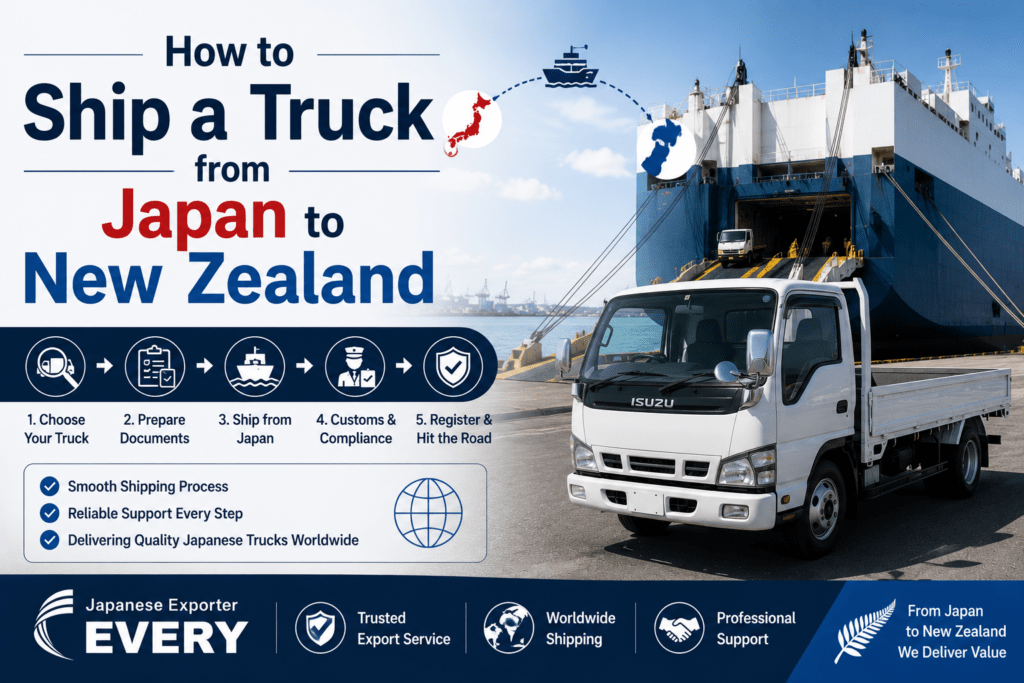

How to Ship a Truck from Japan to New Zealand: The Complete Step-by-Step Shipping Guide for First-Time Buyers
Importing a used truck from Japan to New Zealand is one of the best ways to expand your business while keeping costs under control. Japanese trucks are well known for their durability, fuel efficiency, low mileage, and excellent maintenance. Whether you need a light-duty delivery truck, a construction truck, or a heavy-duty commercial vehicle, Japan offers thousands of high-quality options.
However, after choosing the right truck, the next important step is shipping it safely to New Zealand. Many first-time buyers wonder how international shipping works and what they should expect.
The good news is that the process is much simpler than most people think. With the right exporter and proper preparation, your truck can arrive safely and on schedule.
This complete guide explains every step of shipping a truck from Japan to New Zealand, from selecting a vehicle to receiving it at the destination port.
Why Import Trucks from Japan?
Japanese trucks have earned a strong reputation around the world.
Buyers choose them because they offer:
- Excellent reliability
- Long engine life
- Fuel efficiency
- Affordable prices
- High resale value
- Easy maintenance
- Wide availability of spare parts
Furthermore, Japanese auction markets provide thousands of trucks in many sizes and configurations.
Step 1: Choose the Right Truck
Everything starts with selecting the right vehicle.
Consider your business needs before buying.
Important factors include:
- Truck size
- Payload capacity
- Engine type
- Transmission
- Mileage
- Model year
- Overall condition
Choosing the right truck from the beginning helps avoid unnecessary expenses later.
Step 2: Work with a Trusted Japanese Exporter
A professional exporter makes the entire process much easier.
An experienced exporter can help you:
- Find suitable trucks
- Inspect vehicles
- Explain auction grades
- Prepare export documents
- Arrange shipping
- Answer your questions
Good communication also helps prevent delays throughout the import process.
Step 3: Confirm the Purchase
Once you choose your truck, confirm the purchase with the exporter.
The exporter usually prepares:
- Sales Invoice
- Vehicle information
- Payment instructions
- Shipping schedule
After payment is complete, export preparation begins.
Step 4: Prepare Export Documents
Correct documentation is essential.
Typical export documents include:
- Bill of Lading (B/L)
- Commercial Invoice
- Japanese Export Certificate
- Certified English Translation
- Packing information (if required)
Always review every document carefully before shipment.
Accurate paperwork speeds up customs clearance in New Zealand.
Step 5: Choose the Best Shipping Method
Japanese trucks usually travel by either RoRo shipping or container shipping.
Each option offers different advantages.
RoRo Shipping
RoRo stands for Roll-on Roll-off.
The truck drives directly onto the ship before departure.
Advantages include:
- Lower shipping costs
- Faster loading
- Efficient unloading
- Excellent for operational trucks
- Popular for commercial vehicles
For many buyers, RoRo is the most economical option.
Container Shipping
Container shipping places the truck inside a shipping container.
This option offers:
- Extra protection
- Better security
- Space for spare parts
- Protection from weather
Although container shipping costs more, some buyers prefer the added protection.
Step 6: Schedule the Shipment
After selecting the shipping method, your exporter books space on the vessel.
You normally receive:
- Vessel name
- Voyage number
- Departure date
- Estimated arrival date
- Destination port
Tracking information helps you prepare before arrival.
Step 7: Marine Insurance
Many buyers choose marine insurance for additional protection.
Insurance may cover:
- Storm damage
- Fire
- Theft
- Accidental damage
- Transport-related risks
Although insurance is optional in some shipping arrangements, it provides valuable peace of mind.
Step 8: Track Your Shipment
Modern shipping companies provide regular updates.
Tracking helps you monitor:
- Departure
- Ocean transit
- Arrival schedule
- Port information
Knowing your truck's location helps you prepare customs paperwork early.
Step 9: Customs Clearance in New Zealand
After arrival, customs officials review your documents.
Typical requirements include:
- Bill of Lading
- Commercial Invoice
- Export Certificate
- Identification
- Customs declaration
Submitting complete paperwork helps speed up customs clearance.
Step 10: Biosecurity Inspection
New Zealand has strict biosecurity standards.
Inspectors carefully check imported trucks for:
- Mud
- Grass
- Seeds
- Leaves
- Insects
- Animal contamination
Professional cleaning before export greatly reduces the chance of delays.
Step 11: Compliance Inspection
Every imported truck must complete compliance before registration.
Inspectors examine:
- Vehicle identity
- Chassis number
- Brakes
- Steering
- Suspension
- Lights
- Tyres
- Seat belts
- Structural condition
A well-maintained Japanese truck usually performs well during inspection.
Step 12: Register Your Truck
After passing compliance, you can register your truck.
Registration generally requires:
- Compliance certificate
- Ownership documents
- Identification
- Registration payment
Once registration is complete, your truck is ready for New Zealand roads.
Typical Shipping Timeline
Although schedules vary, the shipping process usually follows this order:
| Step | Typical Timing |
|---|---|
| Purchase confirmation | 1–3 days |
| Export preparation | 3–7 days |
| Vessel booking | 1–2 weeks |
| Ocean shipping | Several weeks (depending on route and schedule) |
| Customs clearance | Usually a few days when documents are complete |
| Biosecurity & compliance | Varies depending on inspections |
| Registration | After compliance approval |
Planning ahead helps ensure a smooth import process.
Common Shipping Mistakes to Avoid
Many delays happen because of simple mistakes.
Fortunately, they are easy to prevent.
Choosing the wrong shipping method
Compare both RoRo and container shipping before deciding.
Incomplete documents
Review every document carefully before shipment.
Dirty trucks
Professional cleaning helps pass biosecurity inspection.
Waiting too long to prepare
Complete paperwork before the vessel arrives.
Working with inexperienced exporters
Experienced exporters reduce mistakes and improve communication.
Tips for Smooth Truck Shipping
These practical tips help ensure a successful import.
Choose a trusted exporter.
Professional support makes every stage easier.
Keep digital copies.
Electronic documents are easy to share quickly.
Track your shipment.
Stay informed throughout the journey.
Prepare customs documents early.
Early preparation reduces waiting time.
Understand total costs.
Include shipping, GST, compliance, registration, and insurance in your budget.
Why Choose EVERY TRADING?
EVERY TRADING has supplied quality Japanese used trucks to customers around the world for many years.
Our experienced team supports buyers from the first inquiry to final delivery.
We provide:
- Carefully inspected Japanese trucks
- Competitive export pricing
- Complete export documentation
- RoRo and container shipping
- Fast worldwide delivery
- Honest communication
- Professional customer support
Whether you are importing one truck or purchasing an entire fleet, we help make the process simple, secure, and efficient.
Final Thoughts
Shipping a truck from Japan to New Zealand is a straightforward process when you understand each step. By choosing the right truck, working with a trusted exporter, preparing accurate documents, selecting the best shipping method, and completing customs and compliance requirements, you can enjoy a smooth importing experience.
Most importantly, partnering with an experienced exporter like EVERY TRADING gives you confidence from purchase to delivery. With expert guidance and reliable support, importing a high-quality Japanese truck becomes an easy and rewarding investment.


Browse Reliable Used Trucks & Buses from Japan
Carefully selected vehicles ready for export worldwide
Search 100,000+ Dealer Stock Vehicles from Japan
Access a wide selection of vehicles from Japanese dealers nationwide. Updated daily.
