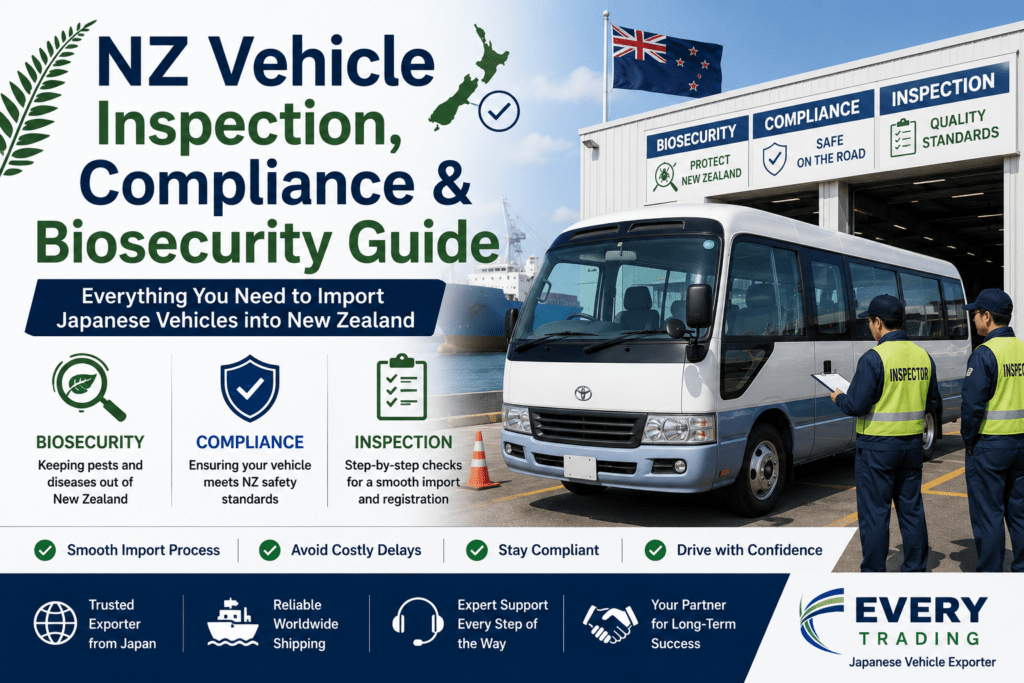

Inspection, Compliance, and Biosecurity Requirements for New Zealand: Your Complete Guide to Importing Japanese Vehicles Successfully
Importing a used vehicle from Japan to New Zealand is an excellent way to own a reliable, affordable, and high-quality car, truck, van, bus, or commercial vehicle. Japanese vehicles are trusted around the world because they offer excellent durability, low mileage, and outstanding value.
However, before you can legally drive your imported vehicle in New Zealand, it must complete several important steps. These include biosecurity inspection, vehicle compliance inspection, and other official checks.
Many first-time buyers worry about these requirements. Fortunately, the process is straightforward when you understand each stage and prepare your vehicle properly.
This guide explains New Zealand's inspection, compliance, and biosecurity requirements in simple language. It also shares practical tips to help you avoid delays and complete your import successfully.
Why These Requirements Are Important
New Zealand has strict standards to protect both road users and the environment.
Government inspections help ensure that imported vehicles:
- Meet safety standards
- Protect public health
- Prevent harmful pests from entering the country
- Comply with local regulations
- Remain safe for everyday use
As a result, every imported vehicle must complete these checks before registration.
The Three Main Requirements
Every imported vehicle normally passes through three major stages:
- Biosecurity inspection
- Compliance inspection
- Registration approval
Each stage has a different purpose.
Understanding these requirements makes the import process much easier.
What Is Biosecurity Inspection?
New Zealand has one of the world's strictest biosecurity systems.
The country protects its farms, forests, and natural environment from foreign pests and diseases.
Therefore, every imported vehicle receives a biosecurity inspection after arrival.
Inspectors carefully examine the vehicle for:
- Mud
- Soil
- Grass
- Seeds
- Leaves
- Insects
- Animal contamination
- Standing water
Even small amounts of contamination may require additional cleaning.
Why Biosecurity Matters
New Zealand depends heavily on agriculture and natural ecosystems.
Foreign pests can seriously damage:
- Farms
- Crops
- Livestock
- Native plants
- Wildlife
Because of this, authorities enforce very high cleanliness standards.
A clean vehicle usually moves through inspection much faster.
How to Prepare for Biosecurity Inspection
Preparation begins before the vehicle leaves Japan.
Professional exporters usually arrange thorough cleaning before shipment.
Pay special attention to:
- Tyres
- Wheel arches
- Engine bay
- Chassis
- Underbody
- Cargo areas
Removing dirt before shipping often saves both time and money.
What Is Compliance Inspection?
After biosecurity clearance, your vehicle moves to a compliance inspection center.
This inspection confirms that the vehicle meets New Zealand's road safety requirements.
Inspectors carefully examine several important areas.
Items Checked During Compliance Inspection
Typical inspection items include:
- Chassis number
- Vehicle identity
- Structural condition
- Braking system
- Steering
- Suspension
- Lighting
- Seat belts
- Tyres
- Odometer
- General roadworthiness
These checks help ensure that every imported vehicle is safe to drive.
Vehicle Identity Verification
Inspectors verify that your documents match the vehicle.
They compare:
- Chassis number
- Vehicle model
- Engine information
- Registration history
Therefore, accurate paperwork is extremely important.
Always review your documents before shipping.
Repairs Before Approval
Sometimes inspectors identify problems that require repair.
Common examples include:
- Worn tyres
- Damaged lights
- Brake repairs
- Steering adjustments
- Suspension repairs
Complete all repairs before returning for reinspection.
Once everything meets the required standard, the vehicle can receive compliance approval.
Documents Required for Inspection
Preparing documents in advance helps the inspection process move smoothly.
Typical documents include:
- Bill of Lading
- Commercial Invoice
- Japanese Export Certificate
- Certified English Translation
- Customs clearance documents
- Identification
- Proof of ownership
Keeping digital copies also makes communication easier.
Registration After Compliance
Once your vehicle passes compliance, registration becomes much simpler.
Registration generally requires:
- Compliance certificate
- Ownership documents
- Identification
- Registration application
- Payment of registration fees
After registration, your vehicle becomes legal to drive on New Zealand roads.
Common Reasons Vehicles Fail Inspection
Most failures involve simple maintenance issues.
Examples include:
- Worn tyres
- Brake wear
- Broken lights
- Seat belt problems
- Structural damage
- Poor maintenance
Fortunately, choosing a well-maintained Japanese vehicle greatly reduces these risks.
Common Biosecurity Problems
The most common biosecurity issues include:
- Mud under the vehicle
- Grass inside wheel arches
- Seeds trapped in suspension parts
- Leaves inside the engine bay
- Dirt in cargo areas
Professional cleaning before export prevents most of these problems.
Tips for Passing Inspection Faster
Simple preparation makes a significant difference.
Choose a high-quality vehicle.
Well-maintained vehicles usually require fewer repairs.
Clean the vehicle thoroughly.
Professional cleaning helps pass biosecurity inspection.
Prepare documents early.
Complete paperwork speeds up processing.
Check vehicle condition before shipping.
Minor repairs in Japan may cost less than repairs after arrival.
Work with an experienced exporter.
Professional exporters understand New Zealand's inspection requirements.
Why Professional Export Support Matters
Experienced exporters help buyers prepare for every stage of the import process.
They can assist with:
- Vehicle inspections
- Export documentation
- Professional cleaning
- Shipping arrangements
- Compliance preparation
- Customer support
As a result, buyers enjoy a smoother importing experience.
Why Choose EVERY TRADING?
EVERY TRADING has supplied quality Japanese used vehicles to customers around the world for many years.
Our experienced team helps customers prepare vehicles for successful import into New Zealand.
We provide:
- Carefully inspected Japanese vehicles
- Professional export preparation
- Complete export documentation
- Thorough vehicle cleaning before shipment
- Fast worldwide shipping
- Honest communication
- Professional customer support
Whether you are importing one vehicle or purchasing multiple trucks for your business, we guide you through every stage of the process.
Final Thoughts
Inspection, compliance, and biosecurity are essential parts of importing a vehicle into New Zealand. Fortunately, these requirements become much easier when you understand the process and prepare your vehicle correctly.
By choosing a clean, well-maintained Japanese vehicle, preparing accurate documents, and working with an experienced exporter like EVERY TRADING, you can complete inspections successfully and avoid unnecessary delays. With the right support, importing a reliable Japanese vehicle into New Zealand becomes a simple, safe, and rewarding experience.


Browse Reliable Used Trucks & Buses from Japan
Carefully selected vehicles ready for export worldwide
Search 100,000+ Dealer Stock Vehicles from Japan
Access a wide selection of vehicles from Japanese dealers nationwide. Updated daily.
