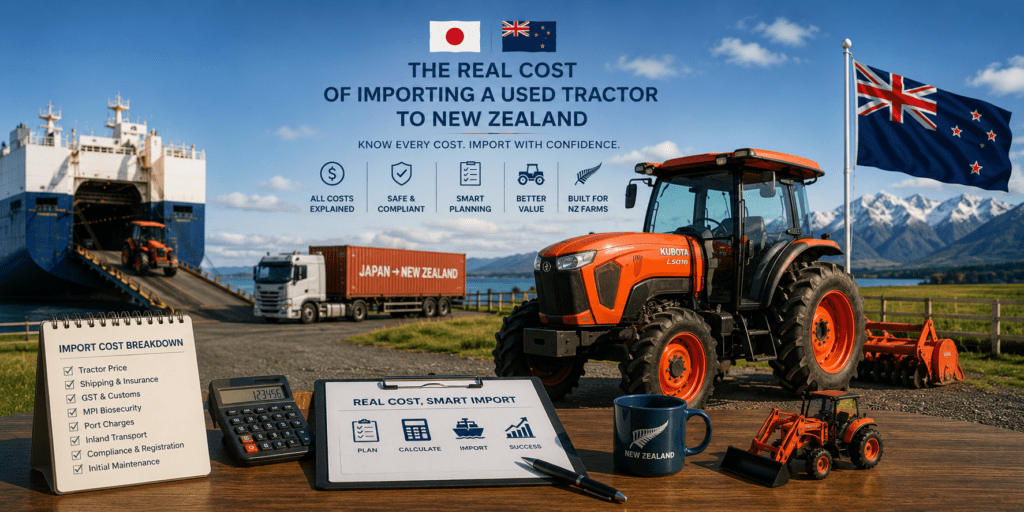

The Real Cost of Importing a Used Tractor to New Zealand: A Complete Buyer’s Guide
Know Every Cost Before You Import a Japanese Used Tractor
Importing a used tractor from Japan can be a smart investment for New Zealand farmers, contractors, landscapers, and agricultural businesses.
Japanese tractors are popular because they are reliable, fuel-efficient, compact, and easy to operate. They also suit many New Zealand work sites, from dairy farms and orchards to lifestyle blocks, vineyards, nurseries, and municipal maintenance jobs.
However, the tractor price is only the first cost.
Before you buy, you should calculate the full import cost. This includes shipping, insurance, GST, customs clearance, MPI biosecurity checks, cleaning, port charges, inland transport, and first maintenance.
New Zealand has strict biosecurity rules. MPI says imported vehicles and machinery can carry soil, plant matter, animals, and pests, so importers must meet biosecurity requirements before clearance.
Therefore, careful planning is very important.
Why New Zealand Buyers Import Used Tractors from Japan
New Zealand has strong demand for practical agricultural machinery.
Farmers and contractors need tractors for:
- Dairy farms
- Sheep and beef farms
- Orchards
- Vineyards
- Vegetable farms
- Lifestyle blocks
- Landscaping
- Mowing
- Roadside work
- Small construction jobs
Japanese used tractors fit these needs well.
They offer:
- Strong diesel engines
- Good fuel economy
- Compact size
- 4WD options
- Easy operation
- Long working life
- Good resale value
- Many attachment options
Popular brands include Kubota, Yanmar, Iseki, Mitsubishi, Shibaura, Hinomoto, and Massey Ferguson dealer stock.
Cost 1: Tractor Purchase Price
The purchase price depends on the tractor itself.
Main factors include:
- Brand
- Model
- Horsepower
- Year
- Engine hours
- 2WD or 4WD
- Transmission
- Tyre condition
- Hydraulic condition
- PTO condition
- Attachments
- Overall maintenance
For example, a compact 20HP tractor usually costs less than a 50HP 4WD tractor with a front loader.
However, the cheapest tractor is not always the best deal.
A clean, well-maintained tractor often saves more money over time.
Cost 2: Shipping from Japan to New Zealand
Shipping is a major cost.
The cost depends on:
- Tractor size
- Tractor weight
- Shipping method
- Departure port in Japan
- Arrival port in New Zealand
- Current freight market
Small tractors may ship more easily.
Large tractors, loaders, and implements may cost more because they need more space.
Therefore, always ask for the shipping cost before confirming the purchase.
Cost 3: Marine Insurance
Marine insurance protects your tractor during ocean transport.
It may cover unexpected damage or loss during shipping.
Although insurance adds cost, it gives peace of mind.
For tractors, this is especially useful because machinery value can be high.
Cost 4: GST and Customs Costs
New Zealand Customs may require duty and/or GST at the time of import. Customs explains that applicable duty and GST must be paid when goods are imported.
GST is a key cost for New Zealand buyers.
Because tax rules can change, confirm the latest calculation with New Zealand Customs or a customs broker before importing.
Also, keep all invoices and payment records.
These documents help with customs clearance.
Cost 5: Customs Broker Fee
Many buyers use a customs broker.
A broker can help with:
- Import entry
- Customs documents
- GST calculation
- Port release
- MPI coordination
- Clearance procedures
A broker fee adds cost.
However, it can save time and reduce mistakes.
For first-time importers, professional help is often worth it.
Cost 6: MPI Biosecurity Inspection
Biosecurity is one of the most important New Zealand import costs.
Used tractors often work in soil, grass, mud, farms, and fields.
Therefore, they can carry:
- Soil
- Seeds
- Grass
- Plant material
- Insects
- Animal matter
- Mud under guards
- Contamination inside tyres or attachments
MPI says vehicles, machinery, and parts must be clean and meet import requirements.
If the tractor fails inspection, MPI may require cleaning or treatment.
That can increase the total cost.
Cost 7: Cleaning and Treatment
Cleaning costs can be high if the tractor arrives dirty.
Used tractors need careful cleaning before shipping.
Important areas include:
- Tyres
- Wheel arches
- Undercarriage
- Radiator area
- Engine bay
- Loader frame
- PTO area
- Hydraulic connections
- Cab floor
- Implements
- Soil hidden behind covers
MPI’s import health standard requires used machinery to be clean and free from biosecurity contaminants and regulated pests.
Therefore, pre-shipment cleaning is very important.
Cost 8: Port Charges in New Zealand
After arrival, port charges may apply.
These can include:
- Terminal handling
- Documentation charges
- Storage
- Inspection movement
- Release fees
- Port service costs
Storage fees can increase if documents are late.
So, prepare all documents before arrival.
Cost 9: Inland Transport
After clearance, the tractor must move from the port to your farm, yard, or workshop.
Transport cost depends on:
- Arrival port
- Delivery distance
- Tractor size
- Tractor weight
- Running condition
- Trailer requirements
A compact tractor may move easily.
A large tractor with attachments may need special transport.
Cost 10: Compliance, Registration, and Road Use
Some tractors may only work on private land.
Others may need road registration.
NZTA explains that imported vehicles must meet requirements before use on New Zealand roads.
If you plan to drive the tractor on public roads, check the rules before buying.
You may need:
- Entry certification
- Registration
- Lighting checks
- Safety checks
- Road equipment
- Identification documents
Always confirm these points with NZTA, an entry certifier, or a local specialist.
Cost 11: Attachments and Implements
Attachments can increase both value and cost.
Common attachments include:
- Rotary tiller
- Front loader
- Mower
- Slasher
- Plough
- Harrow
- Sprayer
- Trailer
- Back blade
- Fertilizer spreader
Attachments help productivity.
However, they also increase shipping space, cleaning needs, and inspection risk.
So, include them in your cost plan.
Cost 12: First Maintenance After Arrival
Even a good tractor may need basic service after arrival.
Budget for:
- Engine oil
- Oil filter
- Fuel filter
- Air filter
- Hydraulic oil
- Coolant
- Grease
- Battery check
- Tyre check
- Belt check
This first service helps protect your investment.
It also gives the tractor a strong start in New Zealand conditions.
Simple Total Cost Formula
Use this formula before buying:
Tractor Price
- Export Cost
- Shipping
- Marine Insurance
- GST and Customs Costs
- Broker Fee
- MPI Inspection
- Cleaning or Treatment
- Port Charges
- Inland Transport
- Compliance or Registration
- First Maintenance
= Real Import Cost
This formula gives you a clearer budget.
Example Cost Thinking
Imagine you buy a compact Japanese used tractor.
The purchase price may look attractive.
However, your final cost may also include shipping, MPI inspection, GST, port handling, transport, and servicing.
Therefore, always compare the total cost, not only the tractor price.
A slightly higher-quality tractor may become cheaper over the long term.
Why Japanese Tractors Are Still Worth Importing
Even after import costs, Japanese tractors often offer excellent value.
They are popular because they provide:
- Reliable performance
- Low fuel use
- Compact operation
- Strong 4WD ability
- Good parts support
- Long service life
- High resale value
For New Zealand farmers, that value matters every day.
A good tractor can support mowing, cultivation, loading, spraying, and property maintenance for years.
Tips to Reduce Import Costs
Choose the Right Size
Do not buy more horsepower than you need.
A smaller tractor may reduce purchase and shipping costs.
Check Condition First
A cheaper tractor with problems can cost more later.
Confirm Cleaning
Ask about pre-shipment cleaning.
This can reduce MPI problems.
Import Attachments Carefully
Useful attachments add value.
However, dirty implements may increase biosecurity risk.
Plan Inland Transport
Check delivery cost before the tractor arrives.
Work with an Experienced Exporter
A good exporter explains the process clearly.
Common Mistakes to Avoid
Looking Only at Tractor Price
The real cost includes many items.
Forgetting MPI Requirements
Dirty machinery can cause delays and extra costs.
Ignoring GST
GST can affect your budget significantly.
Buying the Wrong Tractor
Choose by work purpose, not only price.
Not Checking Road Use Needs
If you need road registration, check requirements first.
Why Choose EVERY FARM TRACTOR
EVERY FARM TRACTOR helps customers buy Japanese used tractors with confidence.
We support buyers with:
- Carefully selected tractors
- Clear quotations
- Detailed photos
- Export support
- Shipping arrangements
- Secure payment guidance
- Documentation support
- Friendly customer service
Our goal is simple.
We help New Zealand buyers understand the real cost before purchase.
Frequently Asked Questions
Is importing a used tractor from Japan worth it?
Yes, it can be.
Japanese used tractors often offer strong value, reliable engines, and long service life.
What is the biggest extra cost?
Shipping, GST, MPI-related costs, and inland transport can all affect the final price.
Why is cleaning so important?
New Zealand protects its environment and agriculture. Used machinery must meet MPI biosecurity requirements.
Can I import a tractor with attachments?
Yes, but attachments may increase shipping and cleaning costs.
Should I use a customs broker?
Many buyers do.
A broker can help with customs and MPI procedures.
Final Thoughts
The real cost of importing a used tractor to New Zealand is more than the purchase price.
You should calculate shipping, insurance, GST, customs clearance, MPI inspection, cleaning, port charges, transport, compliance, registration, and first maintenance.
However, with the right plan, a Japanese used tractor can still be a smart investment.
It can help farmers, contractors, landscapers, and property owners improve productivity while controlling costs.
At EVERY FARM TRACTOR, we help New Zealand buyers import reliable Japanese used tractors with clear information, honest support, and professional export service.
When you understand the real cost, you can buy with confidence and choose a tractor that works hard for many years.


Browse Reliable Used Trucks & Buses from Japan
Carefully selected vehicles ready for export worldwide
Search 100,000+ Dealer Stock Vehicles from Japan
Access a wide selection of vehicles from Japanese dealers nationwide. Updated daily.
