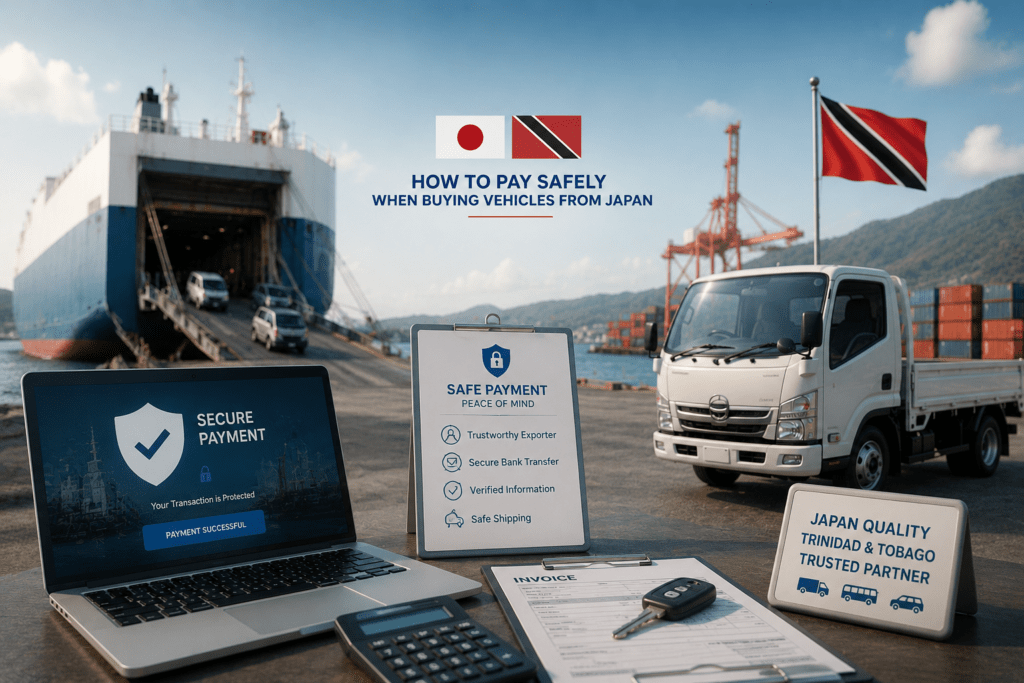

How to Pay Safely When Buying Vehicles from Japan: The Complete Guide for Buyers in Trinidad and Tobago
Protect Your Money and Buy Japanese Used Vehicles with Confidence
Buying a used truck, van, bus, tractor, or passenger vehicle from Japan can be one of the smartest investments for businesses in Trinidad and Tobago. Japanese vehicles offer outstanding reliability, excellent fuel efficiency, and long service life. As a result, they remain the first choice for many importers across the Caribbean.
However, making a safe payment is just as important as choosing the right vehicle. Every year, some overseas buyers lose money because they send funds to unreliable sellers or fail to verify important information before making payment.
Fortunately, avoiding these problems is easier than many people think. With the right knowledge and a trusted Japanese exporter, you can complete your purchase safely and confidently.
This guide explains every step of the payment process in simple English. It also focuses on the needs of buyers in Trinidad and Tobago, where Japanese commercial vehicles continue to support transportation, construction, agriculture, logistics, and small business growth.
Why Safe Payment Matters
Buying a vehicle from another country is different from buying locally.
You cannot inspect the vehicle in person.
You usually pay before the vehicle leaves Japan.
Therefore, trust becomes extremely important.
A safe payment protects:
- Your money
- Your business
- Your vehicle
- Your shipping schedule
- Your future imports
Most successful importers build long-term relationships with reliable exporters.
Why Buyers in Trinidad and Tobago Choose Japan
Businesses throughout Trinidad and Tobago rely on dependable commercial vehicles every day.
Japanese vehicles are popular because they provide:
- Excellent reliability
- Strong diesel engines
- Low maintenance costs
- Long operating life
- Good fuel economy
- High resale value
These advantages help companies reduce operating expenses while improving business efficiency.
Popular Japanese Commercial Vehicles
Many importers in Trinidad and Tobago purchase:
- Toyota Dyna
- Toyota Hiace
- Hino Dutro
- Hino Ranger
- Isuzu Elf
- Isuzu Forward
- Mitsubishi Fuso Canter
- Mitsubishi Fuso Fighter
- Nissan Atlas
- Toyota Coaster
These vehicles work well on both urban roads and rural highways across Trinidad and Tobago.
Understand the Normal Buying Process
Knowing the normal export process helps you avoid scams.
A typical purchase follows these steps:
Step 1
Choose your vehicle.
Step 2
Receive a detailed quotation.
The quotation should include:
- Vehicle price
- Shipping cost
- Destination port
- Payment instructions
- Vehicle information
Step 3
Confirm the order.
Step 4
Send payment.
Step 5
The exporter books shipping.
Step 6
Receive export documents.
Step 7
Collect your vehicle after customs clearance.
Professional exporters explain every step clearly.
Choose a Trusted Japanese Exporter
The exporter you choose matters more than almost anything else.
Before sending money, verify the company carefully.
Look for:
- Many years of export experience
- Company registration in Japan
- Real office address
- Business telephone number
- Customer reviews
- Export history
- Professional website
- Quick customer support
Reliable companies answer questions openly.
They never pressure customers into making immediate payments.
Always Verify Bank Information
Before transferring money, confirm every bank detail.
Check:
- Company name
- Bank name
- Branch name
- SWIFT code
- Account number
- Beneficiary name
Even one incorrect number can delay your payment.
If anything looks unusual, contact the exporter immediately.
Never guess.
Bank Transfer Is the Safest Payment Method
Most Japanese exporters accept international bank transfers.
Wire transfers remain the safest option because they provide:
- Secure banking systems
- Payment records
- International tracking
- Lower fraud risk
- Easy verification
Many banks in Trinidad and Tobago already support international wire transfers.
Ask your bank about:
- Transfer fees
- Processing time
- Exchange rates
- Required documents
Avoid Sending Money to Personal Accounts
Professional exporters normally receive payments through business bank accounts.
Be careful if someone asks you to send money to:
- A personal account
- An account in another country
- A different company name
- A private individual
These requests may indicate fraud.
Always verify before sending funds.
Request a Proforma Invoice
A professional exporter provides a Proforma Invoice before payment.
This document includes:
- Vehicle details
- Chassis number
- Engine size
- Vehicle price
- Shipping cost
- Destination port
- Payment instructions
- Company information
Read every detail carefully.
If something is incorrect, request a correction before making payment.
Confirm the Vehicle Information
Always compare the invoice with the vehicle information.
Verify:
- Make
- Model
- Year
- Chassis number
- Engine type
- Mileage
- Vehicle condition
- Photos
Everything should match.
Understand FOB, CIF, and CFR
Before paying, understand your shipping terms.
FOB (Free On Board)
You pay for the vehicle.
You arrange shipping separately.
CIF (Cost, Insurance, and Freight)
The exporter includes:
- Vehicle
- Ocean freight
- Marine insurance
Many buyers in Trinidad and Tobago prefer CIF because budgeting becomes easier.
CFR (Cost and Freight)
The exporter pays freight.
Insurance remains your responsibility.
Always ask which option your quotation includes.
Ask for Export Documents
Reliable exporters provide official export documents.
Typical documents include:
- Bill of Lading
- Export Certificate
- Commercial Invoice
- Packing List
- Insurance documents (if applicable)
These documents allow customs clearance after arrival.
Beware of Prices That Look Too Good
Everyone wants a bargain.
However, extremely low prices often indicate problems.
Ask yourself:
- Why is this truck much cheaper?
- Are the photos genuine?
- Does the company have export experience?
- Can they explain the vehicle history?
A realistic price usually offers better value than an unbelievable bargain.
Communicate Before Sending Payment
Professional exporters answer questions patiently.
Discuss:
- Payment timing
- Shipping schedule
- Vehicle condition
- Inspection reports
- Additional photos
- Delivery estimate
Clear communication builds confidence.
Why Trinidad and Tobago Businesses Trust Japanese Vehicles
Many industries benefit from Japanese commercial vehicles.
Construction
Heavy-duty trucks transport building materials across Trinidad.
Agriculture
Farmers use durable trucks to move crops, fertilizer, and equipment.
Retail Distribution
Delivery vehicles support supermarkets, wholesalers, and online businesses.
Tourism
Hotels and tour operators often purchase minibuses for guest transportation.
Because these vehicles work every day, buying safely becomes even more important.
Common Payment Mistakes
Avoid these common errors.
Paying Too Quickly
Take time to verify every document.
Ignoring Company Information
Research the exporter before making payment.
Not Reading the Invoice
Always review every detail.
Using Unsecured Payment Methods
Choose international bank transfers through recognized banks.
Forgetting Exchange Rates
Currency changes affect your final cost.
Check exchange rates before transferring money.
How EVERY TRADING Co., Ltd. Supports Safe Purchases
At EVERY TRADING Co., Ltd., customer safety comes first.
We help buyers by providing:
- Clear quotations
- Honest vehicle information
- High-quality inspection photos
- Professional customer support
- Secure international payment instructions
- Reliable shipping arrangements
- Complete export documentation
Our experienced team has supplied Japanese vehicles to customers in more than 100 countries since 2006.
Many businesses continue importing from us because they trust our transparent process.
Frequently Asked Questions
Is bank transfer safe?
Yes.
International wire transfers remain the standard payment method for Japanese vehicle exports.
Can I verify the exporter?
Absolutely.
Check company registration, website, customer reviews, export history, and business contact information.
Should I pay before shipping?
Yes.
Most exporters require payment before booking shipment.
After payment, they arrange export procedures and shipping.
What documents should I receive?
Normally, you should receive:
- Commercial Invoice
- Bill of Lading
- Export Certificate
- Other shipping documents required for customs clearance.
Final Thoughts
Buying a Japanese vehicle should be an exciting investment, not a stressful experience.
For businesses in Trinidad and Tobago, safe payment starts with choosing a trusted exporter, confirming every document, understanding shipping terms, and using secure international bank transfers.
Never rush the payment process. Instead, verify every detail, ask questions, and work with experienced professionals who value transparency.
When you buy safely, you protect your investment and enjoy all the advantages of Japanese quality, reliability, and long-term value.
At EVERY TRADING Co., Ltd., we are committed to making every purchase simple, secure, and reliable. Whether you are importing one vehicle or building an entire commercial fleet, our experienced export team is ready to help you complete your transaction with confidence.


Browse Reliable Used Trucks & Buses from Japan
Carefully selected vehicles ready for export worldwide
Search 100,000+ Dealer Stock Vehicles from Japan
Access a wide selection of vehicles from Japanese dealers nationwide. Updated daily.
