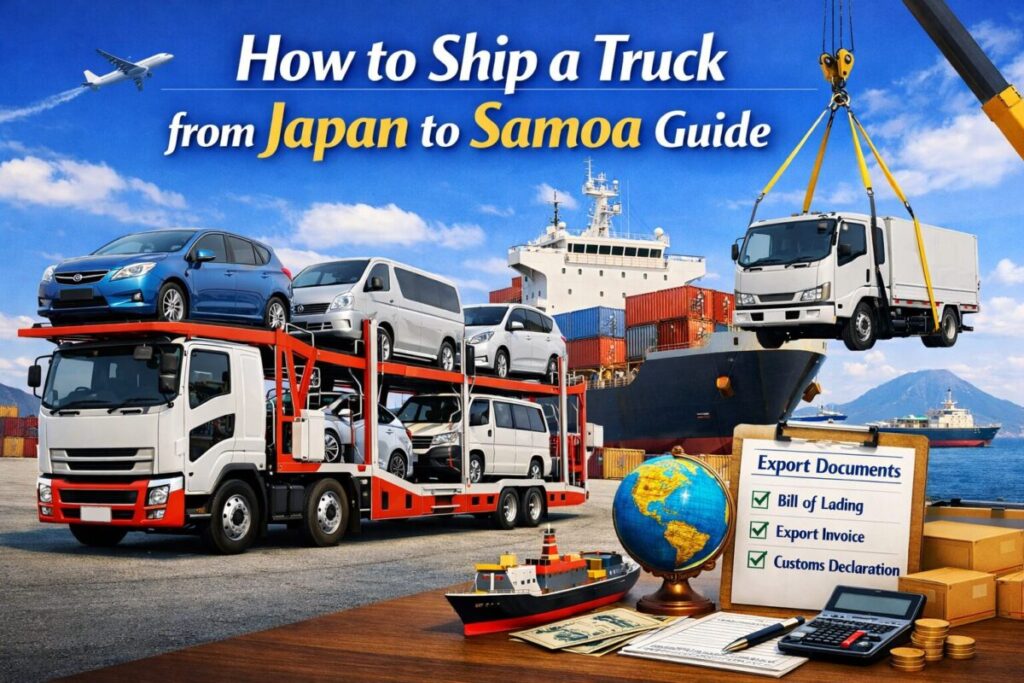

How to Ship a Truck from Japan to Samoa: The Complete Step-by-Step Guide for a Safe and Affordable Import
Importing a used truck from Japan to Samoa is one of the smartest ways to expand your business while keeping costs under control. Japanese trucks are famous for their outstanding reliability, fuel efficiency, and long service life. They also offer excellent value compared to many locally available commercial vehicles.
However, many first-time buyers wonder how the shipping process works. Questions about shipping methods, export documents, customs clearance, and delivery are common. Fortunately, shipping a truck from Japan to Samoa is straightforward when you understand each step.
This complete guide explains the entire shipping process—from choosing the right truck in Japan to receiving it at Apia Port. Whether you are importing one truck or building a commercial fleet, this article will help you import with confidence.
Why Import Japanese Trucks to Samoa?
Japanese trucks continue to be the preferred choice for businesses across Samoa.
They offer many important advantages:
- Excellent reliability
- Competitive prices
- Fuel-efficient diesel engines
- Long service life
- Easy maintenance
- High resale value
- Wide availability of spare parts
As a result, Japanese trucks are widely used in construction, agriculture, transportation, tourism, retail, and logistics.
Step 1: Choose the Right Truck
Everything starts with selecting the right vehicle.
Consider several important factors before buying.
These include:
- Truck size
- Payload capacity
- Engine type
- Mileage
- Vehicle condition
- Year of manufacture
- Auction grade
Choosing the correct truck helps reduce maintenance costs and improves long-term business performance.
Step 2: Work with a Trusted Japanese Exporter
A professional exporter makes the entire importing process much easier.
An experienced exporter can help you:
- Find suitable trucks
- Explain auction grades
- Inspect vehicles
- Prepare export documents
- Arrange shipping
- Provide customer support
Working with an experienced exporter also reduces the risk of costly mistakes.
Step 3: Purchase Your Truck
Once you select your truck, complete the purchase.
Many buyers purchase through:
- Japanese vehicle auctions
- Export dealers
- Stock inventory
Before making payment, always confirm:
- Vehicle condition
- Final price
- Shipping method
- Included services
Clear communication prevents misunderstandings later.
Step 4: Complete Export Documentation
Several export documents are required before shipment.
Typical documents include:
- Bill of Lading (B/L)
- Commercial Invoice
- Japanese Export Certificate
- Export Declaration
- Shipping Instructions
Your exporter usually prepares these documents for you.
Accurate paperwork helps avoid customs delays.
Step 5: Choose Your Shipping Method
Next, select the most suitable shipping option.
The two most common methods are:
Roll-on/Roll-off (RoRo)
RoRo shipping allows the truck to drive directly onto the vessel.
Advantages include:
- Lower shipping cost
- Faster loading
- Simple handling
- Excellent for operational trucks
RoRo is the most popular option for commercial vehicles shipped to Samoa.
Container Shipping
Container shipping places the truck inside a shipping container.
Benefits include:
- Additional protection
- Suitable for valuable vehicles
- Ideal for spare parts or extra cargo
However, container shipping usually costs more than RoRo.
Step 6: Prepare the Truck for Export
Before loading, the truck undergoes several preparation steps.
These may include:
- Cleaning the vehicle
- Safety inspection
- Mechanical checks
- Battery inspection
- Tire pressure check
- Fuel level adjustment
A well-prepared truck arrives in better condition.
Step 7: Shipment from Japan
After preparation, your truck is transported to the export port.
Major Japanese export ports include:
- Yokohama
- Nagoya
- Kobe
- Osaka
- Hakata
Once the vessel departs, your exporter provides shipping information.
Step 8: Track Your Shipment
Tracking your shipment helps you prepare for arrival.
Your exporter usually provides:
- Vessel name
- Voyage number
- Estimated Time of Arrival (ETA)
- Shipping updates
Knowing the arrival schedule allows you to prepare customs documents early.
Step 9: Arrival at Apia Port
After reaching Samoa, your truck arrives at Apia Port.
The port handles:
- Vehicle unloading
- Cargo recording
- Storage
- Customs processing
Your truck then enters the customs clearance process.
Step 10: Complete Customs Clearance
Before collecting your truck, customs must approve the import.
Typical customs requirements include:
- Bill of Lading
- Commercial Invoice
- Export Certificate
- Customs Declaration
- Import Duty payment
- Goods and Services Tax (GST)
Preparing these documents in advance speeds up the clearance process.
Step 11: Register Your Truck
After customs clearance, register your truck according to Samoan regulations.
Registration may include:
- Vehicle inspection
- Registration certificate
- Number plates
- Insurance
Once registration is complete, your truck is ready for legal road use.
Typical Shipping Timeline
Although shipping schedules vary, the process generally follows this order:
| Step | Typical Timeline |
|---|---|
| Purchase Confirmation | 1–3 days |
| Export Preparation | 3–7 days |
| Booking Vessel | 3–10 days |
| Ocean Shipping | Depends on vessel schedule |
| Customs Clearance | Usually a few business days |
| Registration | After customs approval |
Planning ahead helps reduce waiting time.
Common Shipping Mistakes to Avoid
Many first-time buyers experience unnecessary delays.
Fortunately, most problems are easy to prevent.
Choosing Price Over Quality
A cheaper truck may require expensive repairs later.
Always review inspection reports carefully.
Waiting Too Long to Prepare Documents
Late paperwork often delays customs clearance.
Prepare documents before shipment arrives.
Ignoring Shipping Schedules
Always monitor vessel updates.
Good planning reduces unnecessary waiting.
Forgetting Local Costs
Remember to budget for:
- Import Duty
- GST
- Port charges
- Registration
- Insurance
Understanding total costs prevents surprises.
Working with an Inexperienced Exporter
Professional exporters understand documentation, shipping, and customs requirements.
Their experience makes importing much smoother.
Tips for a Successful Import
Experienced buyers follow several simple habits.
Compare Several Trucks
Review multiple vehicles before making your decision.
More choices often lead to better value.
Ask for Inspection Reports
Professional inspections provide confidence before purchase.
Choose the Right Shipping Method
RoRo suits most commercial trucks.
Container shipping works well for special requirements.
Stay in Contact
Regular communication with your exporter keeps every stage moving smoothly.
Prepare Your Budget
Include every import expense before buying.
This helps avoid financial surprises.
Popular Japanese Trucks for Samoa
Many truck models have proven themselves across Samoa.
Toyota Dyna
Reliable for construction, farming, and deliveries.
Toyota ToyoAce
Fuel-efficient and economical.
Isuzu Elf
A trusted commercial truck worldwide.
Mitsubishi Fuso Canter
Excellent durability with affordable maintenance.
Nissan Atlas
Ideal for small business transportation.
Hino Dutro
Dependable performance for everyday commercial work.
These trucks continue to support businesses throughout Samoa.
Why Choose EVERY TRADING?
EVERY TRADING has exported quality Japanese vehicles worldwide for many years.
Our professional services include:
- Access to thousands of auction vehicles
- Detailed vehicle inspections
- Complete export documentation
- Worldwide shipping
- RoRo and container shipping options
- Fast customer support
- Reliable after-sales service
Whether you are importing your first truck or expanding your commercial fleet, our experienced team supports you throughout the entire process.
Frequently Asked Questions
What is the best shipping method for trucks?
RoRo shipping is usually the most economical and practical option for operational trucks.
How long does shipping take?
Shipping time depends on vessel schedules, port operations, and customs clearance.
What documents are required?
The main documents include the Bill of Lading, Commercial Invoice, Export Certificate, and Customs Declaration.
Can EVERY TRADING arrange shipping?
Yes. EVERY TRADING provides complete export support, including vehicle sourcing, documentation, shipping, and customer assistance.
Why are Japanese trucks popular in Samoa?
Japanese trucks offer reliability, fuel efficiency, low maintenance costs, and excellent long-term value.
Final Thoughts
Shipping a truck from Japan to Samoa becomes simple when you understand each step and work with an experienced exporter. From selecting the right truck and preparing export documents to arranging shipping and completing customs clearance, careful planning helps you avoid delays and unnecessary costs.
Japanese trucks continue to be one of the best investments for businesses in Samoa because they deliver dependable performance, excellent durability, and outstanding value. With EVERY TRADING as your trusted export partner, you can enjoy a smooth importing experience backed by professional support from Japan to Samoa.


Browse Reliable Used Trucks & Buses from Japan
Carefully selected vehicles ready for export worldwide
Search 100,000+ Dealer Stock Vehicles from Japan
Access a wide selection of vehicles from Japanese dealers nationwide. Updated daily.
