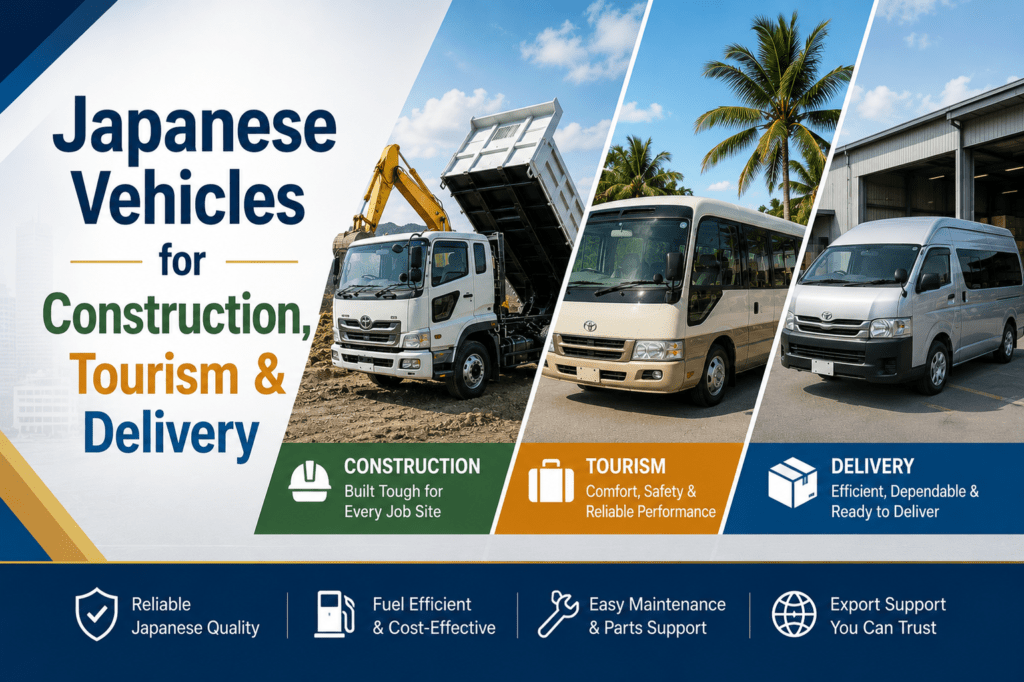

Supporting Construction, Tourism, and Delivery Businesses with Japanese Commercial Vehicles
For many growing businesses, the right vehicle is more than transportation. It is part of daily operations, customer service, profit control, and long-term expansion. A strong truck can keep a construction project moving. A reliable bus can support tourism and guest transport. A practical van can help delivery companies serve more customers every day.
That is why many overseas buyers choose Japanese commercial vehicles. They want more than a low purchase price. They want reliable trucks, durable vans, dependable buses, and work-ready vehicles that can support real business growth. They also want equipment that helps reduce downtime, control maintenance costs, and improve service quality.
In this article, we look at how Japanese commercial vehicles support three major business sectors: construction, tourism, and delivery. We also explain why buyers in many countries continue to trust Japanese trucks, vans, and buses for long-term business use.
Why Commercial Vehicles Matter for Business Growth
A business can have strong demand and loyal customers, but without dependable transport, growth becomes difficult. Deliveries get delayed. Staff lose time. Repair costs rise. Customer trust drops. In many cases, the problem is not the business model. It is the vehicle behind the business.
Commercial vehicles affect more than transport. They affect:
- Daily efficiency
- Fuel cost control
- Customer satisfaction
- Staff productivity
- Delivery speed
- Project timing
- Long-term operating profit
Therefore, the right Japanese used truck, van, or bus can do much more than move goods or passengers. It can help a company work smarter and grow faster.
1. Supporting Construction Businesses with Japanese Trucks
Construction companies need vehicles that can handle hard work every day. They move tools, building materials, workers, equipment, and supplies between job sites. If a truck fails at the wrong time, the entire schedule can suffer. As a result, construction businesses need vehicles that are practical, durable, and ready for repeated use.
This is one reason why Japanese used trucks are popular with contractors, builders, and infrastructure companies in many countries.
Why Japanese Trucks Fit Construction Work
Japanese commercial trucks are often designed for practical business use. They offer dependable engines, useful body types, and manageable running costs. For construction businesses, that combination is very valuable.
Common benefits include:
- Strong reliability for daily work
- Practical loading capacity
- Durable chassis and body design
- Easier cost control compared with brand-new trucks
- Wide choice of flatbed, dump, and cargo truck models
- Good long-term value for business fleets
In addition, many Japanese trucks are well suited for local construction operations where businesses need simple, effective vehicles rather than expensive luxury equipment.
Popular Japanese Trucks for Construction Use
Construction businesses often look for trucks that can move heavy materials and work tools efficiently. Depending on the job, buyers may choose:
Flatbed Trucks
Flatbeds are useful for lumber, pipes, steel, tools, and building materials. They are easy to load and unload, so they work well on active sites.
Dump Trucks
Dump trucks are a practical choice for sand, gravel, soil, demolition waste, and other bulk materials. They save labor and improve site efficiency.
Light and Medium-Duty Work Trucks
These trucks are often used for general construction support, staff equipment transport, and mixed daily tasks.
For many contractors, the right truck helps keep projects on schedule. Therefore, a reliable Japanese truck can become one of the most important tools in the business.
2. Supporting Tourism Businesses with Japanese Buses and Vans
Tourism depends on service, timing, and customer comfort. Hotels, tour companies, airport transfer operators, and guest transport businesses all rely on dependable vehicles. If a shuttle bus breaks down or arrives late, the customer experience suffers immediately.
That is why tourism businesses often choose Japanese buses and vans. They want vehicles that are clean, reliable, and comfortable enough for daily passenger transport. At the same time, they also need practical operating costs because transport can be one of the biggest expenses in tourism operations.
Why Japanese Buses Are a Good Fit for Tourism
Japanese buses and passenger vans are widely used in tourism markets because they offer a strong balance of quality, comfort, and value. They are suitable for airport transfers, hotel shuttles, tour transport, staff movement, and private group service.
Tourism operators often choose them for several reasons:
- Reliable daily performance
- Comfortable passenger seating
- Practical size options for different routes
- Better value than buying new units
- Strong reputation for durability
- Lower long-term risk when carefully selected
For island markets, resort areas, and regional tourism routes, these advantages matter a lot.
Common Uses in the Tourism Sector
Japanese buses and vans can support many tourism-related operations.
Hotel and Resort Transfers
Hotels often need airport pickup vehicles, guest shuttles, and local transfer buses. Reliable transport helps create a better first impression for guests.
Tour Company Operations
Tour operators need vehicles that can carry groups safely and comfortably. Clean and dependable buses help support better reviews and repeat bookings.
Staff Transport
Large hotels, resorts, and tourism facilities often use buses or vans to move staff between locations. This can improve attendance and scheduling.
Event and Group Transport
Japanese minibuses and medium-sized buses are also useful for weddings, excursions, conferences, and private group bookings.
In tourism, service quality is everything. Therefore, a dependable vehicle can help protect the customer experience while also improving operational control.
3. Supporting Delivery Businesses with Japanese Vans and Light Trucks
Delivery businesses depend on speed, consistency, and route efficiency. Whether the company delivers food, retail products, construction supplies, hotel goods, or service equipment, the vehicle plays a direct role in business success.
A delivery vehicle must start every morning, complete multiple trips, and keep running costs under control. If it spends too much time in the workshop, profit quickly disappears. That is why many growing delivery businesses choose Japanese vans and light-duty trucks.
Why Japanese Vans and Delivery Trucks Work So Well
Japanese commercial vans and small trucks are known for practical design and dependable performance. They are often easy to drive, efficient for local routes, and suitable for daily stop-and-go business use.
Delivery operators often choose them because they offer:
- Good fuel efficiency
- Easy handling in towns and urban areas
- Practical cargo space
- Lower operating cost compared with larger vehicles
- Reliable performance for daily delivery work
- Good value for fleet expansion
These benefits are especially important for businesses that make many deliveries each week and need vehicles that can stay productive without constant repair issues.
Best Uses for Japanese Delivery Vehicles
Retail and Wholesale Delivery
Shops, suppliers, and wholesalers often use Japanese vans or light trucks to move stock between warehouses, stores, and customers.
Food and Beverage Supply
Restaurants, hotels, food distributors, and local stores need dependable transport for daily supply runs.
Service and Maintenance Businesses
Electricians, repair teams, cleaning services, and technical support companies often use cargo vans to move tools, parts, and staff.
E-commerce and Last-Mile Delivery
As online shopping grows in many markets, businesses need more efficient delivery vehicles. Japanese vans and compact trucks are a strong fit for this role.
For delivery businesses, every trip matters. Therefore, a dependable Japanese vehicle can improve both speed and profit.
Why Buyers Choose Japanese Commercial Vehicles Across All Three Industries
Construction, tourism, and delivery are different sectors, but they often need the same things from a vehicle. They need reliability, practical value, and support for daily operations. This is why Japanese commercial vehicles remain so popular with overseas buyers.
Across these industries, buyers often choose Japanese vehicles because of five key strengths.
1. Reliability That Supports Daily Work
Business vehicles must work consistently. They cannot become a constant source of repair stress. Japanese trucks, buses, and vans are widely respected because they are built for practical use and long-term performance.
2. Better Value Than Many Local Alternatives
In many markets, local used stock may be limited, overpriced, or in poor condition. Japanese used commercial vehicles often offer better value when buyers compare condition, mileage, quality, and total cost.
3. Wide Range of Commercial Models
Japan offers a large selection of trucks, vans, buses, and work vehicles. Buyers can choose models that fit construction work, passenger transport, retail delivery, hotel operations, agriculture, and more.
4. Long-Term Cost Control
A vehicle that reduces fuel waste, downtime, and emergency repairs can protect profit over time. This is one reason many businesses focus on Japanese vehicles instead of only chasing the lowest purchase price.
5. Strong Potential for Repeat Buying
When a first vehicle performs well, businesses often return for a second and third purchase. This makes Japanese commercial vehicles attractive not only for one order but also for long-term fleet planning.
The Role of Long-Term Partnership in Business Vehicle Supply
A growing business rarely needs only one vehicle forever. Construction firms may need more trucks as they win bigger projects. Tourism operators may add more buses during peak seasons. Delivery companies may expand routes and need more vans. Therefore, the relationship with the exporter matters almost as much as the vehicle itself.
A strong export partner can help buyers:
- Choose vehicles based on real business needs
- Compare different body types and sizes
- Understand condition details before purchase
- Plan shipping and documents smoothly
- Build a long-term vehicle supply strategy
This is where long-term partnership becomes valuable. It turns a one-time transaction into ongoing business support.
What Smart Buyers Check Before Importing a Commercial Vehicle
No matter which industry they work in, smart buyers usually ask the same practical questions before importing from Japan.
Is the Vehicle Right for My Daily Work?
The vehicle should match the cargo, passenger load, route type, and business purpose.
What Will the Full Import Cost Be?
Buyers should confirm the vehicle price, export charges, shipping, duties, taxes, and local costs.
Is the Vehicle Condition Suitable for Long-Term Use?
Mileage, maintenance history, inspection details, and overall condition all matter.
Will It Help Reduce Operating Stress?
A good vehicle should support the business, not create more problems.
Can I Trust the Exporter?
Fast communication, honest information, and professional export support are essential.
These questions help buyers make better decisions and reduce risk.
How Japanese Commercial Vehicles Help Businesses Expand
The right vehicle can change how a business operates. In construction, it can keep projects moving. In tourism, it can improve customer service. In delivery, it can increase route capacity and daily output. Therefore, Japanese commercial vehicles often become a direct tool for growth.
They help businesses expand by:
- Increasing transport reliability
- Supporting more daily jobs or trips
- Reducing downtime and repair pressure
- Improving customer service and timing
- Creating better cost control over time
- Making fleet growth more realistic and affordable
For many companies, this is the real reason to import from Japan. It is not only about buying a used vehicle. It is about building a stronger business system.
Why EVERY TRADING Supports Businesses in These Sectors
At EVERY TRADING, we understand that business buyers do not only need vehicles. They need practical support, clear information, and a supplier they can trust over time. That is why we work with customers in construction, tourism, delivery, agriculture, and many other industries.
We help buyers find Japanese trucks, buses, vans, tractors, and machinery that match real business use. We also support them through the export process with clear communication and long-term partnership.
Our support includes:
- Vehicle sourcing for business use
- Condition guidance and stock selection
- Export process support from Japan
- Shipping and document coordination
- Long-term communication for repeat buyers
Whether the customer needs one delivery van, a construction truck, or multiple vehicles for a tourism fleet, the goal is the same: provide dependable Japanese commercial vehicles that help the business move forward.
Final Thoughts
Construction companies, tourism operators, and delivery businesses all depend on reliable vehicles. Although their work is different, their needs are often very similar. They need quality, efficiency, durability, and long-term value. That is exactly why Japanese commercial vehicles continue to attract buyers around the world.
A strong truck can support construction growth. A dependable bus can strengthen tourism service. A practical van can improve delivery efficiency. Therefore, the right Japanese vehicle can become a real business advantage, not just another expense.
If your business is looking for reliable Japanese trucks, vans, buses, tractors, or machinery, EVERY TRADING is ready to help. With the right vehicle and the right support, your business can grow with more confidence, lower risk, and better long-term value.


Browse Reliable Used Trucks & Buses from Japan
Carefully selected vehicles ready for export worldwide
Search 100,000+ Dealer Stock Vehicles from Japan
Access a wide selection of vehicles from Japanese dealers nationwide. Updated daily.
