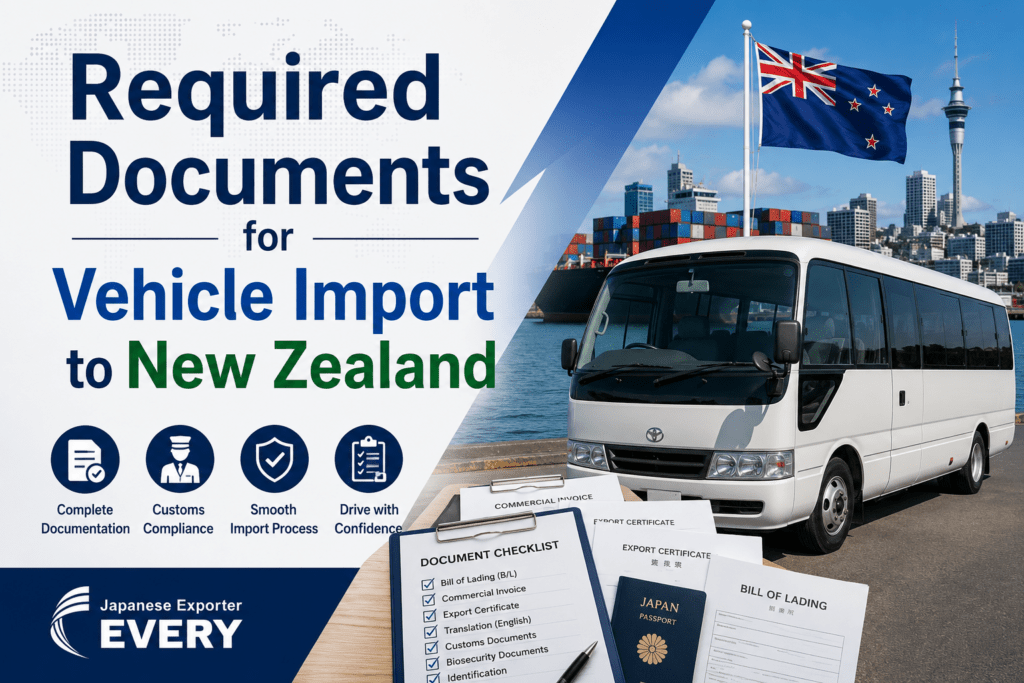

Required Documents for Vehicle Import to New Zealand: The Complete Guide to Import Japanese Used Vehicles Without Delays
Importing a used vehicle from Japan to New Zealand is one of the smartest ways to buy a reliable, affordable, and high-quality vehicle. Japanese used cars, trucks, vans, buses, and commercial vehicles have an excellent reputation for durability, low mileage, and outstanding maintenance history.
However, many first-time buyers worry about paperwork. Missing one document can delay customs clearance, increase storage costs, or even prevent vehicle registration.
The good news is that preparing the correct documents is much easier than many people think. Once you understand the process, importing becomes simple and stress-free.
This guide explains every important document you need when importing a Japanese vehicle into New Zealand. It also shares useful tips that help you avoid delays and complete your import smoothly.
Why Correct Documents Matter
Every country has import rules. New Zealand also requires specific documents before a vehicle can enter the country legally.
Complete paperwork helps you:
- Clear customs faster
- Avoid unnecessary storage charges
- Reduce inspection delays
- Register your vehicle sooner
- Prove legal ownership
- Calculate taxes correctly
- Build confidence throughout the import process
Furthermore, correct documents help shipping companies, customs brokers, inspection agencies, and registration authorities work together efficiently.
Main Documents Required for Vehicle Import to New Zealand
Before your vehicle leaves Japan, prepare every required document carefully.
The most common documents include:
- Bill of Lading (B/L)
- Commercial Invoice
- Export Certificate
- Translation of Export Certificate
- Purchase Invoice
- Packing List (if applicable)
- Biosecurity documents
- Identity documents
- Customs declaration paperwork
Let's look at each document in detail.
1. Bill of Lading (B/L)
The Bill of Lading is one of the most important shipping documents.
The shipping company issues this document after your vehicle loads onto the vessel.
It includes important information such as:
- Vehicle details
- VIN or chassis number
- Engine number
- Port of loading
- Port of discharge
- Shipping route
- Consignee information
Without the Bill of Lading, collecting your vehicle after arrival becomes difficult.
Therefore, always keep several copies.
2. Commercial Invoice
The Commercial Invoice shows the vehicle's selling price.
Customs officers use this document to calculate import duties and Goods and Services Tax (GST).
The invoice usually includes:
- Buyer information
- Seller information
- Vehicle model
- Chassis number
- Year of manufacture
- Selling price
- Currency
- Payment terms
Always check every detail before shipment.
Even a small mistake can slow customs clearance.
3. Japanese Export Certificate
Japan issues an Export Certificate when a vehicle leaves the country permanently.
This document proves legal ownership and confirms the vehicle's registration history.
It normally contains:
- Chassis number
- Registration history
- First registration date
- Engine capacity
- Vehicle weight
- Owner information
New Zealand authorities often require this certificate during compliance inspections.
4. Certified English Translation
Most Japanese Export Certificates are written in Japanese.
Therefore, importers normally provide a certified English translation.
This translation helps inspectors understand:
- Vehicle history
- Registration information
- Technical specifications
- Previous ownership records
Accurate translations also reduce inspection delays.
5. Purchase Invoice or Sales Agreement
Keep your purchase invoice after buying the vehicle.
It proves:
- Purchase price
- Seller details
- Purchase date
- Vehicle information
Moreover, this document supports customs valuation if questions arise.
6. Biosecurity Documentation
New Zealand has some of the world's strictest biosecurity regulations.
The country protects its agriculture and environment from foreign pests and contaminants.
Because of this, imported vehicles must arrive clean.
Vehicles should have no:
- Soil
- Seeds
- Plant material
- Mud
- Insects
- Animal contamination
Many exporters arrange professional vehicle cleaning before shipping.
Doing this greatly reduces inspection problems after arrival.
7. Customs Import Entry
Your customs broker usually prepares the import entry documents.
These forms contain:
- Vehicle details
- Import value
- Shipping information
- Tax calculations
- Importer information
Correct customs paperwork speeds up the release process considerably.
8. Identification Documents
Importers also provide identification documents.
These may include:
- Passport
- New Zealand driver's licence
- Business registration (for companies)
- GST number (if applicable)
Having these documents ready helps customs verify ownership quickly.
Additional Documents for Business Imports
Commercial importers sometimes need additional paperwork.
These documents may include:
- Company registration certificate
- GST registration
- Import permits
- Fleet purchase agreements
- Business invoices
Businesses importing several vehicles should prepare documents before shipment begins.
Documents Required for Compliance Inspection
Every imported vehicle must pass compliance before registration.
Compliance inspectors examine:
- Vehicle identity
- Chassis number
- Safety equipment
- Structural condition
- Odometer
- Lighting
- Seat belts
- Emissions requirements
Supporting documents help inspectors complete the process more efficiently.
Documents Needed for Vehicle Registration
After compliance, you can register the vehicle.
Registration generally requires:
- Compliance certificate
- Proof of ownership
- Identification
- Payment of registration fees
- Licensing documents
After registration, you can legally drive your imported vehicle in New Zealand.
Common Document Mistakes to Avoid
Many first-time buyers experience delays because of simple paperwork mistakes.
Avoid these common problems.
Incorrect Chassis Number
Always compare the chassis number on every document.
One incorrect character may create serious delays.
Missing Export Certificate
Never ship a vehicle without the original Export Certificate.
Replacing it later takes time.
Incorrect Buyer Name
The buyer's name should match every document exactly.
Even small spelling differences can cause verification problems.
Missing Invoice
Keep every invoice from your purchase.
Customs officers may request additional proof of payment.
Poor Vehicle Cleaning Records
Vehicles that arrive dirty often require additional biosecurity cleaning.
That means extra costs and longer waiting times.
Tips for Faster Customs Clearance
You can reduce delays by following a few simple steps.
Double-check every document.
Review all paperwork before shipping.
Work with an experienced exporter.
Professional exporters understand New Zealand's import requirements.
Prepare translations early.
Do not wait until the vehicle arrives.
Keep digital copies.
Save scanned copies of every document.
Respond quickly.
Answer customs or shipping questions as soon as possible.
Small actions often save several days.
Why Buy from a Professional Japanese Exporter?
An experienced exporter helps buyers avoid paperwork mistakes.
Professional exporters usually provide:
- Accurate documentation
- Fast communication
- Vehicle inspection reports
- Export preparation
- Shipping arrangements
- Document verification
- Ongoing customer support
This support makes the entire import process easier, especially for first-time buyers.
Why Buyers Choose EVERY TRADING
EVERY TRADING has helped customers worldwide import quality Japanese vehicles safely and efficiently.
Our experienced export team carefully prepares every required document before shipment. As a result, customers enjoy faster customs clearance, smoother compliance inspections, and fewer unexpected problems.
We provide:
- High-quality Japanese used vehicles
- Complete export documentation
- Fast worldwide shipping
- Honest communication
- Professional customer support
- Assistance before and after shipment
Whether you need a passenger car, truck, van, bus, tractor, or commercial vehicle, our team will support you throughout the entire importing process.
Final Thoughts
Preparing the correct documents is one of the most important parts of importing a vehicle into New Zealand.
Fortunately, the process becomes straightforward when you know which paperwork you need. By preparing your Bill of Lading, Commercial Invoice, Export Certificate, English translation, customs documents, and biosecurity paperwork in advance, you can reduce delays and enjoy a much smoother importing experience.
Most importantly, working with an experienced Japanese exporter gives you confidence from purchase to delivery. With the right support and complete documentation, importing a reliable Japanese used vehicle into New Zealand becomes simple, safe, and rewarding.


Browse Reliable Used Trucks & Buses from Japan
Carefully selected vehicles ready for export worldwide
Search 100,000+ Dealer Stock Vehicles from Japan
Access a wide selection of vehicles from Japanese dealers nationwide. Updated daily.
