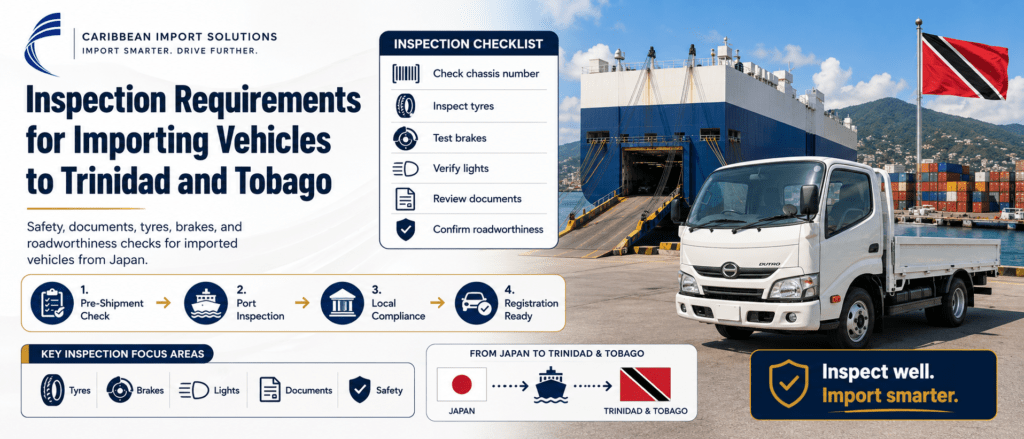

Vehicle Inspection Guide for Trinidad Imports: What Japan Used Vehicle Buyers Must Check
Importing a used vehicle from Japan can be a smart investment.
Japanese used trucks, vans, pickups, buses, and commercial vehicles are popular in Trinidad and Tobago. They offer strong engines, right-hand drive layout, clean condition, and good long-term value.
However, buying and shipping the vehicle is not enough.
The vehicle must also meet inspection and road-use requirements after arrival. This step helps confirm that the vehicle is safe, roadworthy, and ready for local use.
For business buyers, inspection matters even more.
A truck may carry construction materials. A van may deliver food or retail goods. A bus may transport workers or tourists. A pickup may support farms or service teams. Therefore, safety, documents, tyres, brakes, lights, and chassis condition must be checked carefully.
This guide explains inspection requirements for importing vehicles to Trinidad and Tobago.
It focuses on buyers importing used vehicles from Japan. It also gives practical advice for Trinidad and Tobago’s real roads, weather, and business needs.
Why Vehicle Inspection Matters in Trinidad and Tobago
Vehicle inspection is not only a formality.
It protects drivers, businesses, customers, and other road users. It also helps confirm that an imported vehicle can operate safely in Trinidad and Tobago.
This is important because local road conditions vary.
A vehicle may face Port of Spain traffic in the morning. It may later travel to Chaguanas, San Fernando, Couva, Point Lisas, Arima, or rural areas. In Tobago, it may move through hills, coastal roads, narrow roads, and tourism areas.
Also, weather can change quickly.
Heavy rain, tropical heat, humidity, potholes, hills, and stop-and-go traffic can test a used vehicle. Therefore, the inspection process helps reduce risk before road use.
For commercial vehicles, inspection also protects business income.
A failed truck inspection can delay delivery. A bus with safety issues cannot serve passengers. A dump truck with weak brakes can create danger. So, inspection should start before the vehicle leaves Japan.
Inspection Starts Before You Buy
Smart inspection begins in Japan.
Many buyers think inspection only happens after arrival. However, the best buyers check vehicle condition before purchase.
Before buying, request:
- Clear exterior photos
- Interior photos
- Engine photos
- Odometer photo
- Chassis number photo
- Undercarriage photos
- Tyre photos
- Dashboard photos
- Body condition photos
- Cargo body photos
- Auction sheet if available
- Engine start video if possible
- Driving or operation video if possible
This is especially important for trucks.
A used truck may look clean from the front. However, the chassis, tyres, brakes, body floor, and suspension may show the real working condition.
Therefore, check deeper than appearance.
A clean Japanese truck with good documents and clear photos is easier to prepare after arrival.
Key Inspection Points for Used Vehicles from Japan
A buyer should check many areas before import.
The most important areas include:
- Chassis number
- Vehicle age
- Engine condition
- Transmission
- Brakes
- Tyres
- Steering
- Suspension
- Lights
- Mirrors
- Wipers
- Seat belts
- Exhaust smoke
- Fluid leaks
- Air conditioning
- Body rust
- Frame rust
- Cargo body condition
- Safety equipment
- Documents
Each point matters.
However, for Trinidad and Tobago, some points matter more because of local use.
Brakes matter because of hills, traffic, and heavy loads. Cooling matters because of heat. Tyres matter because of rain and road surfaces. Chassis condition matters because of long-term strength.
So, inspect with local roads in mind.
Vehicle Inspection and Registration
After customs clearance, imported vehicles normally move toward inspection and registration.
Registration often requires key documents, including inspection and insurance documents. Therefore, buyers should prepare early.
A practical registration-related file may include:
- Import Licence
- Bill of Lading
- Commercial Invoice
- CARICOM Invoice
- Export Certificate from Japan
- Customs receipt
- Assessment notice
- C82 form
- Certificate of Insurance or Cover Note
- Certificate of Inspection
- TTBS or tyre-related document if required
- Valid ID
- Proof of address
- Business documents if company-owned
The exact list may depend on the vehicle and current rules.
Therefore, buyers should confirm details with the relevant office, customs broker, or local adviser before registration.
Still, one rule is simple.
Your documents must match.
The chassis number, owner name, vehicle model, and vehicle category should stay consistent across all papers.
TTBS and Tyre Inspection Considerations
Tyres are very important for imported used vehicles.
A tyre problem can affect safety and registration. It can also delay the vehicle before road use.
For imported vehicles, buyers should check whether TTBS-related inspection or tyre documentation is required in the current process.
Before shipping, ask for tyre photos.
Check:
- Tyre size
- Tyre tread
- Tyre sidewall condition
- Tyre age if visible
- Load rating
- Matching tyres on the same axle
- Spare tyre condition
- Cracks or cuts
- Uneven wear
- Signs of dry rot
For commercial trucks, tyre load rating is very important.
A delivery truck, flatbed, dump truck, and bus carry different loads. Therefore, the tyre must match the real job.
Do not choose a truck only because it has “usable tyres.”
Check whether those tyres are suitable for Trinidad and Tobago roads and the planned load.
Why Tyres Matter in Trinidad and Tobago
Tyres affect safety every day.
In Trinidad and Tobago, vehicles may run in heat, sudden rain, traffic, and mixed road conditions. Some roads have potholes. Some routes have hills. Some business vehicles carry heavy loads.
Therefore, tyre condition matters.
Poor tyres can increase braking distance. They can also reduce grip in rain. For trucks, weak tyres can create serious risk under load.
So, include tyre replacement in your budget if needed.
A truck with poor tyres may still be worth buying. However, the buyer should know the cost before import.
Inspection for Light-Duty Trucks
Light-duty Japanese trucks are popular in Trinidad and Tobago.
These include:
They support delivery, retail, small construction, food supply, farm transport, and Tobago business.
For light-duty trucks, check:
- Engine start
- Smoke level
- Gear change
- Clutch or automatic transmission
- Brake feel
- Tyres
- Suspension
- Steering
- Cargo bed
- Box body condition
- Lights
- Wipers
- Air conditioning
- Underbody rust
- Cabin floor rust
Many light trucks work in city areas.
Therefore, brakes, cooling, and steering should be strong. Stop-and-go traffic can put pressure on the vehicle.
Inspection for Medium-Duty Trucks
Medium-duty trucks support harder work.
These include:
They may carry construction goods, hardware, farm products, industrial supplies, and equipment.
For medium-duty trucks, check:
- Chassis frame
- Suspension springs
- Brake system
- Engine power
- Cooling system
- Clutch condition
- Transmission
- Tyre load rating
- Cargo body floor
- Hydraulic system if fitted
- Axle condition
- Rust around frame
- Payload details
- Maximum Gross Weight
These trucks often carry heavier loads.
Therefore, a clean frame and strong brakes are very important.
Inspection for Heavy Trucks
Heavy trucks need extra care.
Examples include:
They may support major logistics, construction, port work, and industrial projects.
For heavy trucks, check:
- Engine condition
- Turbo condition
- Exhaust smoke
- Brake system
- Air brake operation if applicable
- Frame condition
- Axle condition
- Tyres and rims
- Cab mounts
- Suspension
- Transmission
- Cooling system
- Electrical systems
- Chassis rust
- Maintenance history if available
Heavy trucks can be expensive to repair.
So, inspect carefully before purchase.
Also, confirm import approval and weight category before shipment.
Inspection for Dump Trucks
Dump trucks are useful in Trinidad and Tobago.
They support construction, road repair, drainage work, site clearing, landscaping, and material transport.
However, dump trucks work hard.
Before buying, check:
- Dump body condition
- Hydraulic lift operation
- Hydraulic leaks
- Cylinder condition
- PTO operation
- Body floor rust
- Rear gate condition
- Frame cracks
- Chassis rust
- Suspension wear
- Brake strength
- Tyres
- Cab condition
If possible, request a video of the dump body lifting.
This helps confirm operation before shipment.
Inspection for Crane Trucks
Crane trucks can support construction and industrial work.
They are useful for moving heavy materials, generators, tanks, pipes, steel, and machinery.
However, crane trucks need careful checks.
Before import, check:
- Crane brand and model
- Boom condition
- Outrigger operation
- Hook and wire condition
- Hydraulic leaks
- Crane capacity
- Safety labels if visible
- PTO operation
- Body frame strength
- Stabilizer condition
- Control operation
- Rust around crane base
A crane truck with weak equipment can become costly.
Therefore, request videos if possible.
Inspection for Box Trucks and Freezer Trucks
Box trucks protect cargo from rain and dust.
They are useful for food supply, retail delivery, furniture, appliances, hotel supply, and courier work.
Check:
- Box body floor
- Side panels
- Rear door
- Locking system
- Roof leaks
- Interior cargo area
- Rust at lower edges
- Tail lift if fitted
- Body height
- Tyres
- Lights and reflectors
For freezer trucks, check the cooling unit carefully.
Ask for:
- Cooling unit photos
- Temperature display photo
- Operation video
- Engine-driven or independent unit details
- Maintenance status if available
A freezer truck is useful for food businesses, but cooling repairs can be expensive.
Inspection for Vans and Pickups
Vans and pickups are common for small businesses.
Toyota Hiace, Nissan Caravan, Mitsubishi L300-type vans, and Japanese pickups can support many uses.
They suit:
- Contractors
- Delivery teams
- Farms
- Repair companies
- Hotels
- Tourism suppliers
- Service businesses
- Small shops
Check:
- Engine
- Transmission
- AC
- Door locks
- Sliding doors
- Cargo area
- Seats if used for passengers
- Tyres
- Suspension
- Underbody
- Rust
- Lights
- Brakes
- Wipers
In Tobago, rust and underbody condition are important because of coastal air.
A cleaner vehicle can last longer.
Inspection for Buses
Used buses support schools, staff transport, churches, tourism, and community transport.
Popular Japanese buses include:
For buses, inspection should focus on passenger safety.
Check:
- Seats
- Seat belts where fitted
- Doors
- Emergency exits
- Interior condition
- AC
- Lights
- Brakes
- Tyres
- Suspension
- Engine cooling
- Floor rust
- Roof leaks
- Steering
- Mirrors
- Wipers
For Tobago tourism, comfort matters too.
A clean interior and working AC can improve customer experience.
Common Reasons Imported Vehicles Fail Inspection
Inspection failure can happen for simple reasons.
Common issues include:
- Bad tyres
- Weak brakes
- Broken lights
- Poor wipers
- Horn not working
- Oil leaks
- Coolant leaks
- Heavy smoke
- Rusted chassis
- Damaged suspension
- Poor steering
- Battery problems
- Incorrect documents
- Chassis number mismatch
- Missing insurance
- Missing customs documents
- Body modification not documented
Many of these issues can be fixed.
However, they create delays and extra costs.
Therefore, check the vehicle before shipment and service it after arrival.
How Road Conditions Affect Inspection Planning
Trinidad and Tobago roads are diverse.
There are highways, city streets, rural roads, hills, industrial zones, coastal roads, and port areas.
A vehicle may face different conditions in one week.
For example, a truck may drive through Port of Spain traffic. Then, it may carry cargo to Chaguanas. Later, it may visit a construction site in South Trinidad. In Tobago, a truck may climb hills and drive near the coast.
Therefore, buyers should inspect for real-world use.
Focus on:
- Brakes for hills and traffic
- Cooling for heat
- Tyres for rain and load
- Suspension for uneven roads
- Steering for tight turns
- Lights for early morning work
- Wipers for sudden rain
- AC for driver comfort
- Chassis for long-term strength
This approach helps the vehicle perform after registration.
Pre-Shipment Inspection Checklist
Before the vehicle leaves Japan, check:
- Chassis number photo
- Engine start video
- Exhaust smoke video
- Odometer photo
- Dashboard warning lights
- Exterior photos
- Interior photos
- Tyre photos
- Underbody photos
- Cargo body photos
- Engine bay photos
- Auction sheet
- Export Certificate details
- Body type
- Year
- Model code
- Dimensions
- Weight
- Equipment operation
- Known repairs
This checklist helps buyers avoid surprises.
It also supports trust between buyer and exporter.
Post-Arrival Inspection Checklist
After the vehicle arrives in Trinidad and Tobago, check:
- Engine oil
- Oil filter
- Coolant
- Brake fluid
- Transmission fluid if needed
- Battery
- Tyres
- Brakes
- Lights
- Wipers
- Horn
- Mirrors
- Seat belts
- Steering
- Suspension
- Air conditioning
- Fluid leaks
- Undercarriage
- Chassis number
- Documents
Also, take photos after release.
This helps create a record for your business.
Documents That Support Inspection
Documents help connect the vehicle to the import process.
Prepare:
- Import Licence
- Bill of Lading
- Commercial Invoice
- CARICOM Invoice
- Export Certificate from Japan
- Customs receipt
- C82 form
- Assessment notice
- Insurance or Cover Note
- TTBS or tyre inspection document if required
- Registration form
- ID
- Proof of address
- Business registration documents if company-owned
If a company owns the vehicle, use the company name consistently.
Do not mix personal and company names unless your broker advises it.
Why Insurance Matters Before Registration
Insurance or a cover note is usually part of the registration process.
Commercial buyers should choose the right coverage.
Tell the insurer how the vehicle will be used.
For example:
- Delivery
- Construction
- Farm use
- Port work
- Staff transport
- Tourism service
- Industrial service
- Fleet operation
A box truck used for retail delivery has different risk from a dump truck used on job sites.
Therefore, explain the use clearly.
How to Prepare the Vehicle Before Official Inspection
Before the official inspection, do a workshop check.
Ask the mechanic to inspect:
- Brakes
- Tyres
- Lights
- Wipers
- Horn
- Suspension
- Steering
- Engine leaks
- Exhaust smoke
- Seat belts
- Chassis rust
- Body safety
- Fluid levels
Also, clean the truck.
A clean vehicle helps inspectors see details. For trucks, clean the underbody and engine area if needed. However, avoid hiding leaks or defects.
The goal is not only to pass.
The goal is to operate safely.
Cost Planning for Inspection
Inspection can lead to extra costs.
Prepare for:
- Tyre replacement
- Battery replacement
- Brake service
- Oil change
- Filter replacement
- Light bulbs
- Wiper blades
- Minor repairs
- AC service
- Underbody cleaning
- Inspection fees
- Registration-related fees
This is normal for used vehicles.
Do not use the full budget only for purchase and shipping.
Keep money ready for inspection and road preparation.
How EVERY Supports Better Vehicle Selection
EVERY helps overseas buyers choose used vehicles from Japan with confidence.
For Trinidad and Tobago buyers, we support practical checks before shipment.
We can help with:
- Japanese used vehicle search
- Auction stock review
- Truck, van, bus, and pickup selection
- Condition photo checks
- Video requests
- Chassis number confirmation
- Export Certificate support
- FOB, C&F, or CIF quotation
- RoRo shipping guidance
- Document preparation support
- Communication before shipment
Also, we understand that buyers need working vehicles.
A contractor needs a strong dump truck. A delivery company needs a reliable box truck. A farmer needs a practical flatbed. A Tobago tourism operator needs a clean van or bus.
Therefore, we help match the vehicle to the job.
Final Inspection Checklist for Trinidad and Tobago Buyers
Before buying:
- Confirm import eligibility.
- Check vehicle age.
- Check chassis number.
- Review auction sheet.
- Request photos and videos.
- Check tyres.
- Check underbody.
- Check engine condition.
- Check body type.
- Check business use.
Before shipment:
- Confirm export documents.
- Confirm vehicle condition.
- Confirm dimensions.
- Confirm shipping method.
- Confirm Import Licence.
- Confirm broker support.
After arrival:
- Clear customs.
- Inspect the vehicle.
- Service basic items.
- Prepare insurance.
- Prepare inspection documents.
- Complete official inspection.
- Continue registration.
- Start business use safely.
Final Advice for Vehicle Importers
Inspection is one of the most important parts of importing a used vehicle.
It helps protect your money. It also protects your business, drivers, customers, and road users.
For Trinidad and Tobago buyers, Japanese used vehicles can offer strong value. They can support construction, delivery, agriculture, tourism, logistics, and industrial work.
However, the best vehicle is not only cheap.
The best vehicle is eligible, well-documented, safe, roadworthy, and suitable for local use.
So, inspect before buying. Prepare before shipping. Service after arrival. Then, complete local inspection and registration with confidence.
With the right checks, your Japanese used vehicle can become a reliable business partner in Trinidad and Tobago.


Browse Reliable Used Trucks & Buses from Japan
Carefully selected vehicles ready for export worldwide
Search 100,000+ Dealer Stock Vehicles from Japan
Access a wide selection of vehicles from Japanese dealers nationwide. Updated daily.
