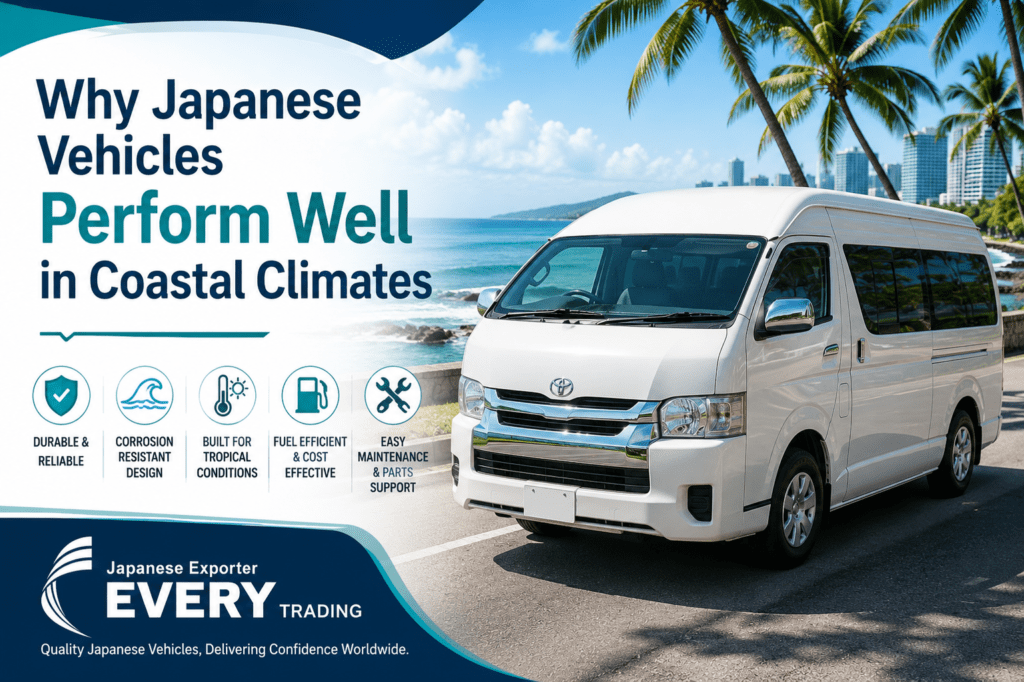

Why Japanese Vehicles Perform Well in Tropical Coastal Climates: Smart Reasons Buyers Keep Choosing Them
Buying a vehicle for a tropical coastal market is not the same as buying for a dry inland area. In coastal regions, vehicles face heat, humidity, salty air, heavy rain, muddy roads, and year-round daily use. These conditions can shorten vehicle life, increase repair costs, and create serious problems for private owners, dealers, fleet operators, and commercial users.
That is why many overseas buyers continue to choose Japanese used vehicles for tropical coastal climates. Across island nations, port cities, beach tourism markets, fishing communities, and humid agricultural regions, Japanese cars, trucks, vans, buses, and tractors have built a strong reputation. Buyers trust them because they are durable, practical, fuel-efficient, and easier to manage in difficult environments.
Of course, no vehicle is completely immune to coastal conditions. Salt and humidity can damage any machine over time. However, Japanese vehicles often perform well because of their engineering quality, strong maintenance culture, dependable diesel and petrol engines, and wide global parts support. In addition, many Japanese commercial vehicles are designed to work hard every day, which makes them a strong match for business use in tropical markets.
In this guide, we will explain why Japanese vehicles perform well in tropical coastal climates, what makes them attractive for buyers in island and seaside regions, and what to check before importing one for your market.
Why Tropical Coastal Climates Are Hard on Vehicles
Before looking at the strengths of Japanese vehicles, it is important to understand the environment itself. Tropical coastal climates are demanding because several risk factors come together at the same time.
1. Salt in the Air Can Speed Up Corrosion
Coastal air often contains salt. Over time, that salt can settle on the body, undercarriage, suspension parts, brake lines, and other metal surfaces. If a vehicle is not cleaned or maintained properly, rust can develop faster.
2. High Humidity Affects Metal, Rubber, and Electrical Parts
Humidity does not only make the weather uncomfortable. It can also affect a vehicle’s condition. Moisture can influence metal parts, wiring, connectors, seals, and cabin materials over time.
3. Heavy Rain Creates Mud, Water Exposure, and Rough Road Use
Many tropical countries experience strong rainy seasons. During those periods, roads may flood, become muddy, or break down. Vehicles in these markets need to handle wet conditions, unstable surfaces, and repeated use in difficult weather.
4. Heat Increases Stress on Engines and Cooling Systems
Hot climates place extra pressure on cooling systems, fluids, hoses, and engine performance. If a vehicle is poorly maintained or badly designed, long-term reliability can suffer.
5. Daily Commercial Use Adds More Wear
In many coastal markets, vehicles are not only personal transport. They are also work tools. Trucks carry goods from ports. Vans support tourism. Buses move passengers. Tractors work in humid farming areas. As a result, durability matters even more.
Why Japanese Vehicles Perform Well in Tropical Coastal Climates
Japanese vehicles are popular in coastal regions for good reasons. They offer a mix of reliability, practical engineering, and long-term value that fits these markets well.
1. Strong Reliability in Daily Use
One of the biggest reasons buyers choose Japanese vehicles is simple: they are known for reliability. This matters in tropical markets because downtime can quickly become expensive.
A business in a coastal town may depend on one truck for deliveries. A hotel may need a van every day. A farmer may rely on a tractor during the rainy season. If the vehicle stops working, business also stops. Japanese vehicles are attractive because many models are built for steady, long-term daily use.
This is especially true for commercial vehicles from brands like:
- Toyota
- Isuzu
- Mitsubishi Fuso
- Hino
- Nissan
- Mazda
- Suzuki
- Daihatsu
- Honda
- Subaru
These brands have earned trust because their vehicles often keep working well when maintained properly.
2. Durable Engines That Handle Heat and Heavy Use
Tropical coastal markets often demand long hours of operation in hot conditions. Engines may face stop-and-go city traffic, heavy loads, rough roads, and frequent idling. Therefore, engine durability is a major buying factor.
Japanese engines are respected because they often combine:
- Solid long-term durability
- Stable performance in daily work
- Good fuel efficiency
- Practical serviceability
- Strong support for both petrol and diesel users
For example, Japanese diesel trucks are widely used in tropical countries for:
- Delivery services
- Construction work
- Agriculture
- Passenger transport
- Tourism support
- Wholesale distribution
These engines are trusted because they are built for commercial work, not only light personal driving.
3. Good Cooling Performance for Hot Regions
Heat can be hard on vehicles. In tropical climates, a strong cooling system is essential. While maintenance always matters, many Japanese vehicles are known for dependable cooling performance when they are in proper condition.
This helps in situations such as:
- Driving in heavy traffic with limited airflow
- Climbing hills in hot weather
- Carrying cargo in high temperatures
- Working long hours in commercial use
A reliable radiator system, healthy hoses, clean coolant passages, and proper maintenance all matter. Japanese vehicles often perform well in these areas because they are engineered for long-term practicality.
4. Practical Design for Real-World Business Use
Japanese vehicles are often designed with function in mind. That is one reason they perform well in tough environments. Instead of focusing only on appearance, many Japanese commercial models focus on ease of use, serviceability, durability, and operating efficiency.
This is especially useful in tropical coastal markets where vehicles often support:
- Fishing businesses
- Hotel and resort transport
- Port delivery work
- Farm operations
- Retail supply routes
- School transport
- Construction and utility jobs
A vehicle that is easy to load, easy to service, and easy to drive becomes a major advantage in these settings.
5. Strong Fuel Efficiency Helps in High-Use Markets
Fuel cost matters everywhere, but it matters even more in markets where vehicles run every day for business. Japanese vehicles are often chosen because they offer a good balance between performance and economy.
This is important in coastal regions where vehicles may:
- Run frequent short trips around towns and ports
- Carry goods between shops, farms, and hotels
- Support public transport or tourism operations
- Travel long distances between islands or regional centers after import
Better fuel efficiency helps business owners protect profit margins. Therefore, this is one of the biggest reasons Japanese vehicles remain attractive.
6. Wide Global Parts Availability
A vehicle can only stay useful if parts are available. This is one of the biggest strengths of Japanese vehicles in export markets. Because Japanese brands are already popular around the world, spare parts and service knowledge are often easier to find.
This is especially helpful in tropical coastal countries where buyers want:
- Faster repairs
- Lower downtime
- Better long-term maintenance planning
- Easier resale opportunities
- More confidence when buying used stock
Popular Japanese models often have strong aftermarket support. That makes ownership easier for both private buyers and commercial operators.
7. Japanese Commercial Vehicles Are Built for Work
In many tropical coastal regions, commercial vehicles are more important than passenger cars. Trucks, buses, vans, mini trucks, and tractors support the local economy every day. Japanese vehicles are popular in these categories because they are built with real work in mind.
Common Japanese vehicles used in coastal markets include:
- Used trucks for delivery and construction
- Mini trucks for farms and local business
- Vans for tourism, hotels, and transport
- Buses for schools and passenger routes
- Tractors for humid agricultural areas
- Dump trucks for infrastructure and road work
These vehicles are not only practical to buy. They are also practical to keep running over time.
Why Japanese Vehicles Are Popular in Island Markets and Seaside Regions
Coastal and island markets often have very specific vehicle needs. Roads may be narrow. Businesses may be small but active. Import budgets may be limited. Fuel cost may be important. Salt air may affect long-term ownership decisions. Japanese vehicles fit these markets well for several reasons.
Compact Models Work Well on Narrow Roads
Japanese kei trucks, compact vans, and small trucks are ideal for island roads, resort towns, fishing villages, and crowded coastal areas.
Commercial Models Match Local Business Needs
Japanese used trucks, buses, and tractors support tourism, agriculture, fisheries, logistics, and construction. These are all key industries in coastal economies.
Strong Value in Used Condition
Many buyers in island markets want a vehicle that is affordable but still dependable. Used Japanese stock often offers this balance better than many alternatives.
Easy Resale in Active Import Markets
Because Japanese brands already have a strong reputation, resale can also be easier. This matters for dealers and for businesses planning future fleet upgrades.
What Types of Japanese Vehicles Work Best in Tropical Coastal Climates?
Different buyers need different vehicles. However, several categories are especially popular in tropical and coastal environments.
Japanese Pickup Trucks and Light-Duty Trucks
These are ideal for delivery work, fishing businesses, construction support, and local cargo transport.
Popular examples include:
Mini Trucks (Kei Trucks)
Kei trucks are useful for farms, small resorts, maintenance teams, and market transport.
Popular examples include:
Vans for Tourism and Daily Business Use
Compact and mid-size vans work well for hotel transport, airport service, passenger movement, and local delivery.
Popular examples include:
Buses for Schools, Hotels, and Shuttle Services
Coastal tourism and regional transport often depend on buses and minibuses.
Popular examples include:
Tractors for Humid Farming Regions
Agricultural areas in tropical zones often need practical and durable tractors.
Popular examples include:
Important Truth: Japanese Vehicles Still Need Proper Rust and Condition Checks
Japanese vehicles often perform well in tropical coastal climates, but buyers should not misunderstand this point. A Japanese vehicle is not “immune” to rust or salt damage. Any used vehicle can have corrosion if it has been exposed to snow, road salt, sea air, or poor maintenance.
That is why inspection matters.
Before importing a vehicle for a tropical coastal market, buyers should check:
1. Undercarriage Condition
This is one of the most important areas. Look for rust on the frame, suspension parts, floor sections, and structural components.
2. Body and Bed Rust
For trucks, inspect the cargo bed, wheel arches, side panels, and lower body areas.
3. Brake and Fuel Line Condition
Corrosion in these areas can become a serious safety and maintenance issue.
4. Cooling System Health
Hot climates require a healthy cooling system. Check the radiator, hoses, coolant condition, and signs of overheating history.
5. Air Conditioning Performance
In tropical markets, working air conditioning is not a luxury. It is a real operating need, especially for buses, vans, and business vehicles.
6. Electrical Condition
Humidity can affect electrical parts over time. Check lights, switches, sensors, and wiring condition where possible.
7. Maintenance History
A well-maintained vehicle is usually a better choice than a cheaper vehicle with poor history or unclear condition.
How to Make a Japanese Vehicle Last Longer in a Coastal Climate
Even the best vehicle needs the right care. Buyers and fleet operators can protect vehicle life by following practical maintenance steps.
Wash the Undercarriage Regularly
Salt and mud should not stay on the vehicle for long. Regular cleaning helps reduce corrosion risk.
Repair Paint Damage Early
Small scratches and exposed metal can become rust points. Fast repair helps protect the body.
Keep Cooling Systems in Good Condition
Flush coolant when needed, inspect hoses, and replace worn parts before they fail.
Grease and Inspect Suspension Components
Vehicles working on wet roads and rough surfaces benefit from regular inspection and lubrication where appropriate.
Store Vehicles Carefully When Possible
Covered parking or basic weather protection can help reduce long-term exposure.
Service the Vehicle on Time
Oil changes, filter changes, brake checks, and suspension checks all matter more when the vehicle works in a harsh environment.
Why Coastal Buyers Still Prefer Japanese Vehicles Over Many Alternatives
Despite the challenges of heat, humidity, and salt exposure, buyers in coastal regions continue to choose Japanese vehicles because they offer a strong mix of benefits:
- Reliable performance
- Practical engineering
- Fuel efficiency
- Wide parts support
- Strong resale demand
- Good selection of trucks, vans, buses, and tractors
- Excellent value in the used market
For many buyers, that combination is hard to beat. Japanese vehicles may still need careful inspection and maintenance, but they often deliver the kind of dependable long-term service that tropical business operators want.
Why Working with a Trusted Exporter Matters
Condition matters more than brand name alone. A Toyota, Isuzu, Nissan, Suzuki, or Hino vehicle can still be a poor choice if it has hidden rust, hard commercial abuse, or weak maintenance history. Therefore, buyers should not only ask “Which brand is best?” They should also ask “Which vehicle is in the best condition for my market?”
That is why working with a trusted exporter is so important.
At EVERY TRADING, we help overseas buyers source quality used Japanese cars, trucks, vans, buses, tractors, and machinery for real market conditions. We understand that tropical coastal buyers often need durable vehicles with practical specifications, good condition, and long-term value. Our team supports customers from stock selection to export shipment, helping them make smarter buying decisions from Japan.
Final Thoughts: Japanese Vehicles Make Sense for Tropical Coastal Markets
Tropical coastal climates are demanding. Salt air, humidity, heat, heavy rain, and rough roads all create extra pressure on vehicles. However, Japanese vehicles continue to perform well in these environments because they offer reliability, practical engineering, strong fuel economy, and wide global support.
That is why buyers in island nations, seaside cities, tourism markets, and humid farming regions continue to trust Japanese used vehicles. Whether the need is for a truck, van, bus, mini truck, or tractor, Japan offers many practical options for coastal business and personal use.
If you are looking for Japanese vehicles that perform well in tropical coastal climates, the best approach is simple: choose the right model, inspect condition carefully, and work with an experienced exporter who understands your market.
If you want dependable Japanese vehicles for your coastal market, EVERY TRADING is ready to help.


Browse Reliable Used Trucks & Buses from Japan
Carefully selected vehicles ready for export worldwide
Search 100,000+ Dealer Stock Vehicles from Japan
Access a wide selection of vehicles from Japanese dealers nationwide. Updated daily.
