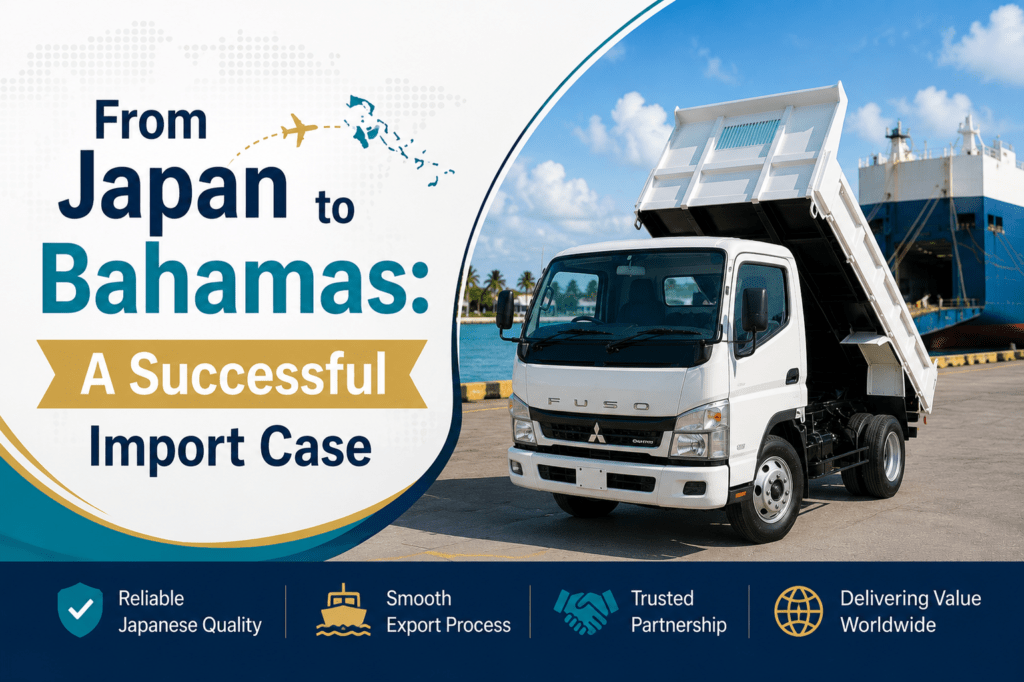

From Japan to Bahamas: A Successful Import Case
Importing a vehicle from Japan can be a major turning point for an overseas buyer. For many businesses in the Bahamas, the right truck, van, bus, or commercial vehicle is not only a transport tool. It is part of daily business, customer service, delivery work, and long-term growth. Therefore, one good import decision can create real business value for years.
At the same time, many first-time or growing buyers still have questions. Can I trust the exporter? Will the vehicle arrive in good condition? Is the total cost worth it? Will the vehicle match local business needs in the Bahamas?
These questions are important. In fact, they are often the reason buyers spend weeks or even months comparing Japanese used vehicles, exporters, and shipping options. However, when the right vehicle meets the right buyer through the right export partner, the result can be a smooth and profitable experience.
In this article, we share a successful import case from Japan to the Bahamas. This real-style customer story shows how a buyer chose a Japanese vehicle, why that choice made sense, and how the import supported business growth and long-term trust.
Why Buyers in the Bahamas Look to Japan for Vehicles
The Bahamas has many industries that depend on reliable vehicles every day. Delivery companies need trucks. Hotels need shuttle buses and support vehicles. Contractors need work trucks. Small and medium-sized businesses need vans and light commercial vehicles for products, tools, and service work.
Because of this, vehicle quality matters a lot. A business cannot afford constant breakdowns, late deliveries, or rising repair bills. It needs dependable transport that can support daily operations without creating new problems.
This is one reason why Japanese used vehicles are popular in the Bahamas. Buyers often choose them because they offer:
- Reliable quality
- Strong long-term value
- Competitive pricing compared with local options
- A wide range of commercial vehicle choices
- Better fuel efficiency in many cases
- Good resale potential
- Strong reputation for durability
For many businesses, importing from Japan becomes a practical way to improve operations while keeping costs under control.
The Customer’s Goal: Find a Reliable Vehicle for Business Use
In this case, the buyer in the Bahamas was looking for a commercial vehicle that could support daily business use. The goal was not to buy just any used vehicle. Instead, the buyer wanted a dependable unit that could work consistently, reduce stress, and support future growth.
The business had reached a point where its transport needs were increasing. Customer demand was growing, and the owner needed a better vehicle solution. Local options were available, but they did not offer the same balance of condition, price, and reliability.
So the buyer started looking at Japanese used vehicles with a clear goal in mind:
- Buy a vehicle with strong long-term value
- Avoid constant repair problems
- Keep operating costs manageable
- Improve reliability for business use
- Build confidence in importing from Japan
This mindset shaped every step of the buying process.
Step 1: Researching Japanese Vehicles and Exporters
Like many buyers in the Bahamas, the customer did not start by sending money immediately. First, he spent time researching. He wanted to understand how importing from Japan worked and how to avoid mistakes.
He compared Japanese vehicle exporters, looked at available stock, and reviewed the kinds of vehicles already working in Caribbean markets. He also tried to understand what made one exporter more trustworthy than another.
During this stage, the buyer focused on several important points:
Clear Communication
He wanted an exporter who answered questions quickly and clearly. Fast communication is important, especially when buying from another country.
Honest Vehicle Information
Photos, specifications, mileage, condition reports, and service details all mattered. The buyer wanted to avoid surprises after arrival.
Export Experience
A company with real export experience can make the process much smoother. This includes document support, shipping coordination, and practical advice.
Long-Term Support
The buyer was not only thinking about one purchase. He wanted a supplier he could trust again in the future if the first order went well.
This is an important lesson for other overseas buyers. A successful import often begins long before payment. It begins with careful research and smart questions.
Step 2: Choosing the Right Vehicle for the Bahamas Market
Once the buyer found an exporter he felt comfortable with, the next step was choosing the right vehicle. This part was very important because the vehicle had to match local business needs in the Bahamas.
The buyer did not simply choose the cheapest option. Instead, he focused on value. He wanted a vehicle that could work well in daily operations, stay reliable over time, and support the business without creating high maintenance pressure.
The selection process focused on five key areas.
1. Vehicle Purpose
The buyer first confirmed how the vehicle would be used. Was it for delivery work, customer transport, supply movement, or business operations? This helped narrow the search.
2. Condition
The buyer checked the condition carefully. He wanted a vehicle that looked clean, had practical mileage, and showed signs of proper care.
3. Running Cost
Fuel use, maintenance needs, and overall efficiency were important. A vehicle that looks cheap at first can become expensive if running costs are too high.
4. Suitability for Local Roads and Work
The vehicle had to fit the business environment in the Bahamas. Size, loading capacity, and ease of use all mattered.
5. Future Value
The buyer also thought about long-term ownership. If the business later upgraded or changed vehicles, resale value would still matter.
Because of this careful process, the final choice was not random. It was a business decision based on practical needs.
Step 3: Confirming Costs Before the Purchase
One of the smartest things the buyer did was ask for a full cost picture before making a decision. He did not focus only on the vehicle price. Instead, he wanted to understand the total cost from Japan to the Bahamas.
This included:
- Vehicle purchase price
- Export fees
- Shipping cost
- Documentation support
- Port charges after arrival
- Import duties and taxes
- Local registration or related costs
This step gave the buyer a realistic budget. More importantly, it helped him feel in control. Many first-time importers become stressed because they only think about the vehicle price. However, experienced buyers know that the full landed cost is what matters.
By asking early, the customer avoided confusion later.
Step 4: Moving from Inquiry to Purchase with Confidence
After reviewing the vehicle details and full cost estimate, the buyer made the decision to move forward. At this stage, trust was very important. The exporter’s communication had already created a strong impression, and the buyer felt confident enough to proceed.
The process moved forward step by step:
- Vehicle selection was confirmed
- Payment details were explained clearly
- Export preparation started
- Shipping arrangements were made
- Documents were prepared for the buyer
This kind of structure matters because it reduces uncertainty. A buyer who understands each step feels much more secure throughout the transaction.
Step 5: Shipping from Japan to the Bahamas
Shipping is one of the most emotional parts of the process for overseas buyers. Once payment is complete, the vehicle is still far away, and the customer has to wait. Therefore, updates during this stage are very important.
In this successful case, the buyer received support throughout the shipping process. He stayed informed about the schedule, export progress, and document preparation. That regular communication made a big difference.
The buyer especially appreciated:
- Quick replies to questions
- Clear updates about shipment timing
- Smooth handling of export documents
- A professional and organized process
This support helped turn the shipping period from a stressful wait into a manageable part of the transaction.
The Vehicle Arrives in the Bahamas
The most important moment in the story came when the vehicle arrived in the Bahamas. This is where the import experience becomes real. The buyer could finally see the vehicle in person, compare it with expectations, and decide whether the process had truly been successful.
In this case, the result was positive.
The vehicle matched the buyer’s expectations well. It arrived in a condition that gave the customer confidence, and it was ready to support the business. That first successful experience changed the buyer’s view of importing from Japan.
Instead of seeing Japanese import as something risky or difficult, he started to see it as a practical business strategy.
That is a major turning point for many customers.
What Made This Import a Success
A successful import does not happen by luck alone. In most cases, it comes from several good decisions made at the right time. This case was successful because the buyer focused on the right priorities from the beginning.
The Buyer Chose Value, Not Just a Low Price
The goal was not to find the cheapest unit. The goal was to find a reliable and practical vehicle that could support business use.
The Buyer Asked Good Questions
Instead of rushing, the buyer asked about condition, cost, documents, and shipping. That reduced risk and created clarity.
The Exporter Provided Strong Communication
Fast and honest communication built trust at every stage. This helped the buyer stay confident from inquiry to arrival.
The Vehicle Matched the Business Need
The selected unit was not random. It was chosen for a clear business purpose, and that made the purchase more useful after arrival.
The Process Was Managed Professionally
Export documents, shipping arrangements, and customer updates all played a role in making the transaction smooth.
How the Imported Vehicle Helped the Business
The success of this case was not only about receiving a vehicle. It was about what happened after the vehicle started working in the Bahamas. That is the real measure of value.
The imported vehicle helped the business in several ways.
1. Better Daily Reliability
A reliable vehicle helps a business keep promises. It reduces delays, supports smoother scheduling, and lowers the risk of work interruptions.
2. More Confidence in Operations
When the owner knows the vehicle can handle daily work, it becomes easier to accept new jobs, plan routes, and serve customers well.
3. Better Cost Control Over Time
A dependable Japanese vehicle can reduce the pressure of constant repairs and unplanned downtime. That supports healthier business finances.
4. Stronger Trust in Importing from Japan
After one successful experience, the buyer gained confidence not only in the vehicle but also in the process itself. That confidence can lead to future orders and business expansion.
Why This Story Matters to Other Bahamas Buyers
This customer story reflects a situation many Bahamas buyers understand well. They need commercial vehicles that work hard, last longer, and support business growth. They also want to avoid the stress of unreliable stock and unclear import processes.
That is why this case matters. It shows that importing from Japan can work very well when the buyer chooses carefully and works with the right exporter.
If you are in the Bahamas and thinking about importing a truck, van, bus, or other commercial vehicle from Japan, this case offers several useful lessons:
- Take time to research exporters
- Ask for full cost details before buying
- Choose a vehicle based on business use, not only price
- Focus on condition, reliability, and long-term value
- Work with a partner who communicates clearly and consistently
These simple steps can make a major difference.
Why Japanese Vehicles Continue to Attract Bahamas Buyers
Japanese used vehicles continue to be attractive in the Bahamas because they meet real business needs. They are practical, durable, and often more affordable than local alternatives when buyers compare value over time.
They also support many industries, including:
- Delivery and supply businesses
- Construction and trade operations
- Tourism and hotel transport
- Retail and wholesale service
- Small business logistics
- Regional commercial transport
For buyers who want dependable vehicles without the cost of buying brand new, Japanese stock remains a strong option.
The Role of Long-Term Partnership in Vehicle Importing
This successful case also shows something else. A good import is not only about one vehicle. It is often the beginning of a long-term partnership.
Once a buyer has a smooth first experience, future orders become easier. Communication becomes faster. Vehicle preferences become clearer. Trust becomes stronger. Over time, this can turn one import into a long-term business relationship.
That is why EVERY TRADING focuses not only on vehicle sales but also on long-term customer support. We understand that many overseas buyers are not just shopping for one unit. They are building transport capacity, improving service quality, and planning for future growth.
We support customers with:
- Japanese trucks, vans, buses, tractors, and machinery
- Practical vehicle suggestions for business use
- Export support and document handling
- Fast communication and clear updates
- Long-term trust for repeat buying
Final Thoughts
This successful import case from Japan to the Bahamas shows how the right vehicle and the right support can create real business value. By focusing on reliability, total cost, communication, and long-term purpose, the buyer made a smart decision that supported both daily operations and future confidence.
For Bahamas buyers, importing from Japan is not only about getting access to used vehicles. It is about finding dependable commercial transport, controlling costs, and building a stronger business foundation.
If you are considering your next truck, van, bus, or commercial vehicle from Japan, the best time to start is with the right questions and the right export partner. EVERY TRADING is ready to help you move from inquiry to successful import with confidence.


Browse Reliable Used Trucks & Buses from Japan
Carefully selected vehicles ready for export worldwide
Search 100,000+ Dealer Stock Vehicles from Japan
Access a wide selection of vehicles from Japanese dealers nationwide. Updated daily.
