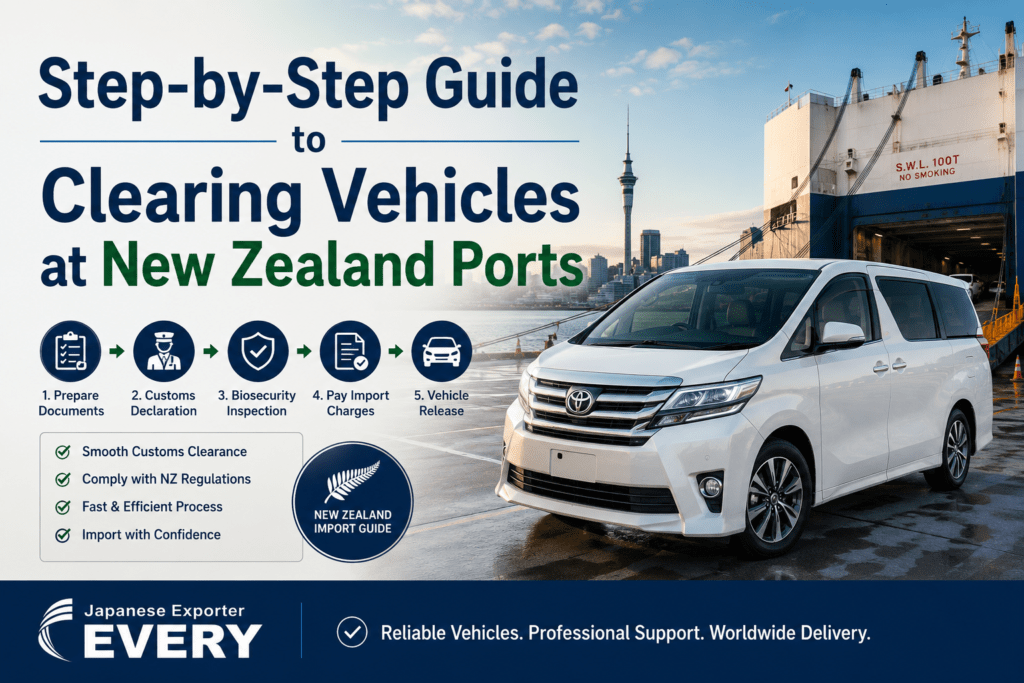

Step-by-Step Guide to Clearing Vehicles at New Zealand Ports: Import Your Japanese Vehicle Quickly and Without Delays
Buying a quality used vehicle from Japan is an excellent investment. Japanese used cars, trucks, vans, buses, tractors, and commercial vehicles offer outstanding reliability, excellent maintenance records, and competitive prices. That is why thousands of buyers in New Zealand choose Japanese imports every year.
However, after your vehicle arrives, one important step remains. You must clear it through the port before you can complete compliance, registration, and finally drive it.
Many first-time importers worry that customs clearance is difficult. Fortunately, the process is straightforward when you understand each step and prepare the correct documents in advance.
This complete guide explains how to clear your imported vehicle at New Zealand ports, what happens during each stage, and how to avoid unnecessary delays.
Why Port Clearance Is Important
Port clearance is the process that allows your imported vehicle to enter New Zealand legally.
During this process, authorities check:
- Import documents
- Customs requirements
- Biosecurity standards
- Vehicle identification
- Taxes and charges
- Shipping information
Once your vehicle passes these checks, it can move to the next stage of compliance inspection and registration.
Therefore, understanding the clearance process helps save both time and money.
Step 1: Prepare All Required Documents Before Arrival
Preparation begins long before the ship reaches New Zealand.
Gather all necessary paperwork early.
Typical documents include:
- Bill of Lading (B/L)
- Commercial Invoice
- Japanese Export Certificate
- Certified English Translation
- Purchase Invoice
- Identification documents
- Customs paperwork
Keeping digital and printed copies makes the process much easier.
Furthermore, accurate documents reduce the chance of customs delays.
Step 2: Monitor Your Shipment
After your vehicle leaves Japan, monitor its shipping progress.
Most shipping companies provide:
- Vessel name
- Voyage number
- Estimated arrival date
- Tracking information
Following the shipment allows you to prepare for customs before the vessel arrives.
As a result, you can respond quickly if additional information becomes necessary.
Step 3: Receive the Arrival Notice
Before the vessel reaches New Zealand, the shipping company usually sends an Arrival Notice.
This document confirms:
- Arrival date
- Port location
- Container or RoRo details
- Cargo reference numbers
- Collection instructions
Read the notice carefully and verify every detail.
Step 4: Submit Customs Documentation
The next step is customs clearance.
You or your customs broker submits the required documents to New Zealand Customs.
Officials review:
- Vehicle value
- Ownership
- Shipping documents
- Import declaration
- Applicable taxes
If everything matches correctly, customs processing usually moves smoothly.
Step 5: Pay Import Charges
Some imported vehicles require payment of taxes or other government charges.
Your customs broker normally calculates these costs.
Paying fees quickly helps prevent storage charges at the port.
Therefore, prepare your payment before arrival whenever possible.
Step 6: Complete Biosecurity Inspection
New Zealand has strict biosecurity rules.
Every imported vehicle must meet high cleanliness standards.
Inspectors check for:
- Mud
- Grass
- Seeds
- Leaves
- Insects
- Animal contamination
- Standing water
Vehicles cleaned professionally in Japan often pass inspection much faster.
A clean vehicle also reduces additional cleaning costs.
Step 7: Vehicle Release from the Port
After customs and biosecurity approval, the port releases your vehicle.
You can then arrange transport to a compliance inspection center.
Many buyers use professional transport companies because they understand local procedures and scheduling.
This option also saves time.
Step 8: Compliance Inspection
Imported vehicles must complete compliance before registration.
Inspectors examine:
- Chassis number
- Structural condition
- Safety equipment
- Brakes
- Steering
- Lights
- Seat belts
- Odometer
- General roadworthiness
Preparing good documentation supports a smoother inspection.
Step 9: Register Your Vehicle
Once compliance is complete, registration becomes much easier.
Registration normally requires:
- Compliance certificate
- Identification
- Ownership documents
- Registration payment
- Licensing application
After registration, your imported Japanese vehicle is ready for New Zealand roads.
Major New Zealand Ports for Vehicle Imports
Several ports regularly receive imported vehicles from Japan.
Popular ports include:
- Auckland
- Tauranga
- Lyttelton
- Wellington
- Nelson
- Napier
Each port follows similar customs procedures, although processing times may vary slightly.
RoRo or Container: Does It Change the Clearance Process?
Japanese vehicles usually arrive by either RoRo shipping or container shipping.
RoRo Shipping
RoRo stands for Roll-on Roll-off.
Advantages include:
- Lower shipping costs
- Faster loading
- Simple unloading
- Excellent for passenger vehicles
- Popular for trucks and buses
Container Shipping
Container shipping offers additional protection.
It works well for:
- High-value vehicles
- Multiple vehicles
- Spare parts
- Machinery
- Special equipment
Although the shipping method differs, the customs clearance process remains largely the same.
Common Reasons for Clearance Delays
Most delays happen because of avoidable mistakes.
Here are the most common issues.
Missing Documents
Incomplete paperwork slows customs processing immediately.
Always review every document before shipment.
Dirty Vehicles
Mud or plant material often causes biosecurity delays.
Professional cleaning before export helps prevent this problem.
Incorrect Vehicle Information
The chassis number should match every document exactly.
Even one incorrect letter may require additional verification.
Late Tax Payments
Outstanding charges prevent vehicle release.
Therefore, pay all required fees promptly.
Slow Communication
Respond quickly when customs or shipping companies request additional information.
Fast replies often shorten the clearance process.
Tips for Faster Vehicle Clearance
A few simple habits make importing much easier.
Work with an experienced Japanese exporter.
Professional exporters understand New Zealand import requirements.
Hire a customs broker.
Experienced brokers reduce paperwork mistakes.
Prepare documents early.
Do not wait until the ship arrives.
Track your shipment regularly.
Knowing the arrival date helps you plan ahead.
Clean the vehicle before export.
This step reduces biosecurity problems.
Keep digital copies.
Electronic copies are easy to share when needed.
Why Choose EVERY TRADING?
EVERY TRADING has supplied high-quality Japanese used vehicles to customers around the world for many years.
We support buyers throughout the entire export process.
Our services include:
- Quality Japanese used vehicles
- Complete export documentation
- Careful vehicle inspections
- Fast international shipping
- Reliable communication
- Professional customer support
- Import guidance before and after shipment
Whether you are importing one vehicle or building a commercial fleet, our experienced team helps make the process simple and efficient.
Final Thoughts
Clearing an imported vehicle at a New Zealand port is much easier when you understand each step in advance. Preparing complete documents, tracking your shipment, meeting customs requirements, passing biosecurity inspections, and completing compliance all help you receive your vehicle without unnecessary delays.
Most importantly, choosing an experienced Japanese exporter gives you peace of mind throughout the entire journey. With proper planning and professional support, importing a reliable Japanese vehicle into New Zealand becomes a smooth and rewarding experience.


Browse Reliable Used Trucks & Buses from Japan
Carefully selected vehicles ready for export worldwide
Search 100,000+ Dealer Stock Vehicles from Japan
Access a wide selection of vehicles from Japanese dealers nationwide. Updated daily.
